The global men’s underwear market will see strong expansion between 2025 and 2033. Analysts expect the market to reach over USD 42.8 billion by 2033, growing at a compound annual growth rate of 4.6%. This growth comes from rising consumer demand for comfort, style, and performance.
Market insights show that technology and sustainability shape new product features. Leading brands such as Friendtex drive this transformation with innovative designs and eco-friendly materials. Industry professionals, investors, and brands can find valuable insights to guide their strategies.
Key Takeaways
The global men’s underwear market is projected to exceed USD 42.8 billion by 2033, driven by consumer demand for comfort and style.
Sustainability and technology are key trends shaping new product features, with brands like Friendtex leading the way in eco-friendly materials.
E-commerce is rapidly growing, making it easier for consumers to access a wide range of men’s underwear options.
Younger consumers, especially Millennials and Gen Z, prioritize comfort, inclusivity, and customization in their underwear choices.
Brands that focus on innovation and sustainable practices will capture future growth and meet evolving consumer preferences.
Global Men’s Underwear Market Analysis
Market Size and Growth
The global men’s underwear market continues to expand at a steady pace. Recent analysis shows strong momentum in both value and volume. Market segmentation reveals diverse product categories and consumer groups. The following points highlight the latest figures and forecasts:
The global men’s underwear market size reached USD 37.58 billion in 2024.
In 2023, the market was valued at US$38.96 billion.
Forecasts indicate the market will exceed US$65.3 billion by 2033.
The market is projected to grow at a CAGR of 6.95% from 2025 to 2032.
Experts expect a CAGR of 5.3% through 2033.
These insights reflect robust demand and evolving market trends. The forecast period will likely see new product launches and increased adoption of advanced fabrics. Market segmentation by style, material, and region will drive further growth.
Key Growth Drivers
Several factors contribute to the expansion of the men’s underwear market. Analysis of consumer behavior and industry developments reveals the following drivers:
Consumers seek comfort and functionality in their underwear choices.
E-commerce platforms offer greater accessibility and convenience.
Product innovation introduces advanced tailoring and fabric blends.
Ethical sourcing and supply chain transparency attract more buyers.
The shift toward casual wear and health awareness influences purchasing decisions.
Market trends show that brands must adapt quickly to changing preferences. Insights from recent studies suggest that technology and sustainability play a major role in shaping new products. Market segmentation helps brands target specific age groups and style preferences.
Friendtex stands out as a premium manufacturer in this competitive landscape. The company’s commitment to sustainability, innovation, and quality sets it apart. The table below summarizes Friendtex’s impact on the global men’s underwear market:
Aspect | Description |
|---|---|
Sustainability | Friendtex uses premium sustainable materials like organic cotton, bamboo, and modal. |
Certifications | The company holds certifications such as GOTS and the Organic 100 Content Standard. |
Technological Innovation | Advanced manufacturing processes ensure high standards for comfort, durability, and eco-friendliness. |
Market Position | Friendtex supports high-end brands in North America and partners with European brands for customized solutions. |
Global Presence | The company’s commitment to innovation enables it to meet diverse market demands effectively. |
Friendtex’s approach aligns with the latest market trends and consumer expectations. The company’s expertise in market segmentation and product customization supports brands seeking unique and high-quality men’s underwear.
As the market evolves, Friendtex continues to deliver innovative solutions and sustainable products.
Segmentation and Trends Analysis
Product Type Segmentation
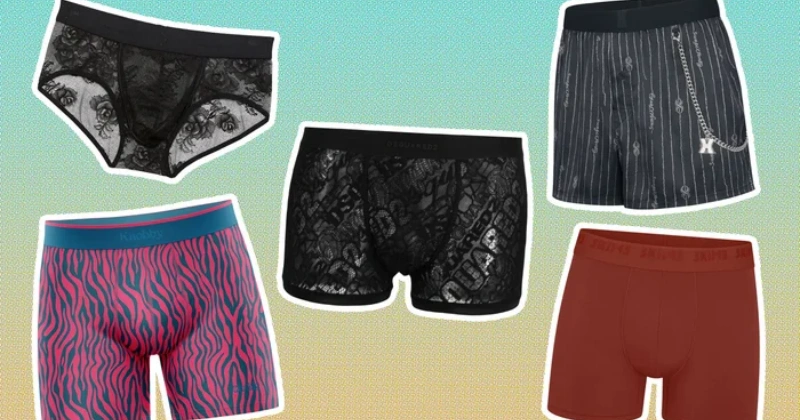
The men’s underwear market features several main product types. These include briefs, trunks, boxers, and thongs. Each type appeals to different consumer preferences and lifestyles. The table below shows the market value, share, and growth rate for each product type in 2024:
Product Type | Market Value (2024) | Market Share (%) | CAGR (%) |
|---|---|---|---|
Briefs | USD 4,749.11 million | 30.0 | 8.0 |
Trunks | USD 5,540.63 million | 35.0 | 8.5 |
Boxers | USD 3,960.00 million | 25.0 | 7.5 |
Thongs | USD 1,583.04 million | 10.0 | 8.3 |
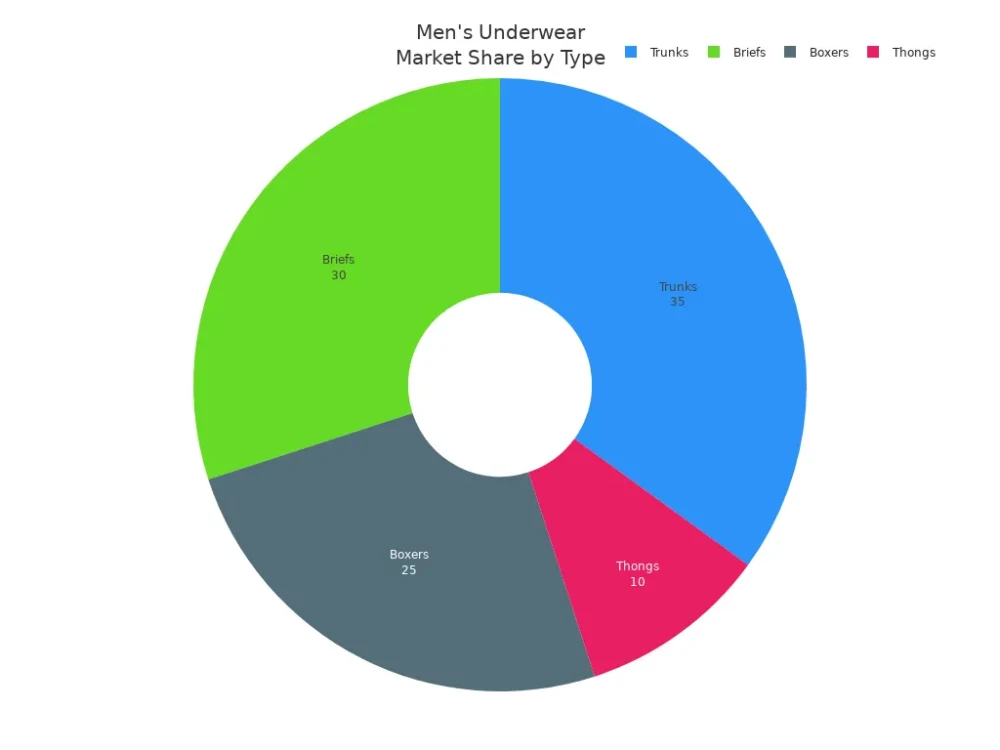
Trunks lead the market, followed by briefs and boxers. Friendtex offers a wide range of these styles, including plus-size and sports options, to meet diverse needs.
Fabric Segmentation
Fabric choice plays a key role in consumer decisions. The market divides into natural, synthetic, blends, and other materials. Natural fabrics, especially organic cotton, hold the largest share at 37.77% in 2024. Many consumers prefer hypoallergenic and breathable underwear.
Friendtex uses premium fabrics such as organic cotton, modal, and bamboo, which align with current trends for comfort and sustainability.
Natural materials (organic cotton) dominate the market.
Synthetic and blended fabrics offer durability and stretch.
Eco-friendly options attract health-conscious buyers.
Age Group and Price Range
The market serves all age groups, from teens to seniors. The table below shows the main age segments and their price preferences:
Age Group | Price Range |
|---|---|
15–25 Years | Premium, Mid, Low |
26–35 Years | Premium, Mid, Low |
36–45 Years | Premium, Mid, Low |
46–55 Years | Premium, Mid, Low |
56–65 Years | Premium, Mid, Low |
Above 65 Years | Premium, Mid, Low |
Younger men often choose stylish and premium underwear, seeing it as a fashion statement. Older buyers focus on comfort and fit. Friendtex addresses both groups with trendy designs and supportive features.
Distribution Channels
Distribution channels shape how consumers access products. The market uses both online and offline channels. E-commerce platforms have grown rapidly, offering convenience and variety. Physical stores remain important for buyers who prefer to see and feel products before purchase.
Friendtex supports brands with flexible supply solutions, helping them reach customers through multiple channels.
Note: Trend analysis shows that brands succeed by offering a mix of product types, premium fabrics, and strong online presence. Friendtex’s commitment to quality and innovation positions it well in this evolving market.
Regional Growth Insights
Asia-Pacific Market
The Asia-Pacific region leads the global men’s underwear market in both size and growth. The market reached about USD 26.18 billion in 2024 and is expected to rise to USD 28.13 billion in 2025. Analysts project a compound annual growth rate of 7.2% from 2025 to 2030.
Several countries drive this expansion, including China, India, Japan, Australia, and South Korea. Rapid urbanization, higher disposable incomes, and a growing preference for premium and designer innerwear fuel this growth.
Retail chains continue to expand, and consumers show more interest in different fabric types. Friendtex, with its roots in China, plays a significant role in this region. The company’s focus on quality and innovation supports the rising demand for premium products and helps shape regional trends.
North America and Europe
North America and Europe remain important markets for men’s underwear. In North America, strong infrastructure and high consumer readiness support steady market growth. Established industry players invest heavily in digital transformation and industrial expansion.
Regulatory support and new applications in commercial and technological segments also contribute. In Europe, strict quality standards and sustainability goals influence consumer choices. Rising disposable incomes and changing fashion trends further boost the market.
Brands that prioritize eco-friendly materials and advanced designs gain a competitive edge.
Other Key Regions
Other regions, such as Latin America and the Middle East, and Africa, show promising growth. Economic development and increasing brand awareness drive the market in Latin America.
In the Middle East and Africa, improved retail infrastructure and changing consumer habits support expansion. The table below summarizes key growth factors by region:
Region | Growth Factors |
|---|---|
Asia Pacific | Rapid urbanization, rising disposable income, and increasing preference for premium and designer innerwear. |
North America | Urbanization and changing consumer preferences. |
Europe | Rising disposable incomes and changing fashion trends. |
Latin America | Economic growth and increasing brand awareness. |
Middle East and Africa | Growing retail infrastructure and changing consumer habits. |
Note: The global men’s underwear market continues to evolve as each region responds to unique drivers and trends. Brands like Friendtex, with a strong presence in Asia-Pacific, help set new standards for quality and innovation.
Men’s Underwear Market Share and Statistics
Leading Brands and Market Concentration
The men’s underwear market features several major brands that shape global sales. These leading companies include:
Phillips-Van Heusen Corporation
Hanesbrands Inc.
Jockey International Inc.
Ralph Lauren Corporation
Levi Strauss & Co.
American Eagle Outfitters Inc.
Naked Brand Group Inc.
Perry Ellis International Inc.
HUGO BOSS
Berkshire Hathaway Inc. (Fruit of the Loom)
These brands hold a significant share of the market. Their strong distribution networks and brand recognition drive product demand and steady sales. Friendtex stands out by supporting high-end brands with premium manufacturing and sustainable practices.
The company’s certifications, such as GOTS and the Organic 100 Content Standard, set it apart in a crowded field.
Product and Fabric Market Share
Product demand in the men’s underwear market varies by fabric, price, and usage. The table below highlights the main segments:
Category | Segment Type | Description |
|---|---|---|
Fabric Material | Cotton (Largest) | Cotton leads due to comfort and breathability. |
Polyester (Fastest) | Polyester grows quickly for its moisture-wicking and durable qualities. | |
Price Range | Low (Largest) | The low-price segment attracts budget-focused buyers. |
High (Fastest) | High-end products see fast growth as luxury brands gain popularity. | |
Usage Occasion | Regular (Largest) | Everyday styles dominate sales of men’s undergarments. |
Athletic (Fastest) | Athletic underwear grows as more men seek performance features. | |
Target Audience | Young Adults (Largest) | Young adults drive the largest share of product demand. |
Fashion Enthusiasts (Fastest) | Fashion-forward buyers show rapid growth. |
Friendtex meets these trends by offering a wide range of fabrics, including organic cotton and modal, and by providing both classic and athletic styles.
Regional Market Share
Asia-Pacific leads the men’s underwear market, driven by a large population and rising disposable income. North America follows, with forecasts showing the fastest growth due to increased demand for comfort and innovative designs.
In the Asia-Pacific, a growing online retail ecosystem and fashion awareness boost product demand and sales. North America’s market benefits from a shift toward premium innerwear and greater male grooming awareness. These trends support strong sales and continued market expansion.
Brands that focus on quality, sustainability, and innovation, like Friendtex, are well-positioned to capture future growth in global sales of men’s undergarments.
Competitive Landscape and Strategic Developments
Key Players and Brand Strategies
The men’s underwear market features many brands that use unique strategies to stand out. Companies focus on affordability, comfort, fashion, and sustainability. Some brands target athletes, while others appeal to fashion-forward buyers. The table below shows how leading brands differentiate themselves:
Brand | Strategy Description |
|---|---|
HanesBrands | Known for affordability and broad distribution. |
Fruit of the Loom | Emphasizes comfort and value. |
Calvin Klein | Focuses on fashion-forward designs. |
Saxx Underwear | Innovates with fabrics and ergonomic fit. |
MeUndies | Offers bold patterns and subscription models. |
Uniqlo | Combines affordability with functional design. |
Tommy John | Known for comfort and innovative fabric blends. |
Jockey International | Mix of classic and performance underwear. |
Under Armour | Performance-oriented underwear for athletes. |
Patagonia | Prioritizes sustainability and eco-conscious materials. |
Lululemon | Focuses on activewear integration in men’s underwear. |
Friendtex supports high-end brands by offering a one-stop manufacturing solution. The company uses advanced technology and sustainable materials. Its certifications, such as GOTS and Organic 100 Content Standard, show a commitment to eco-friendly practices.
Friendtex helps brands create unique products that match current market trends.
Recent Innovations and Expansions
Brands continue to launch new products and expand retail locations to drive market growth. Companies introduce innovative features and open flagship stores in major cities. The table below highlights recent developments:
Brand | Product | Description | Launch Date | Price Range |
|---|---|---|---|---|
Knix | MNTD | A new men’s brand offering boxers, T-shirts, and socks with Mint Condition™ Anti-Odor Technology and the Pristine Pouch™. | November 11, 2025 | Starting at $22 CAD/USD for boxers, $50 CAD/USD for tees |
Brand | Expansion Type | Location | Duration/Timeline |
|---|---|---|---|
Skims | Men’s Pop-Up | Nordstrom NYC flagship store | Until September 29, 2025 |
Knix | Retail Expansion | New York City flagship store at 242 Lafayette Street, SoHo | 2025 |
Friendtex continues to innovate by offering customizable men’s underwear collections. The company uses breathable and antibacterial fabrics to meet changing consumer needs. Its global reach and flexible manufacturing help brands respond quickly to market changes.
These strategies support ongoing growth and strengthen the competitive landscape.
Technological Advancements and Sustainability Trends
Fabric Technology and Performance
Men’s underwear has seen rapid innovation in fabric technology. The market now offers products that go beyond basic coverage. Manufacturers use advanced materials to improve comfort, durability, and hygiene. Many brands have introduced smart designs for active lifestyles.
These designs focus on all-day well-being and performance.
The following features are common in modern men’s underwear:
Anti-microbial finishes help prevent bacterial growth.
Odor-resistant coatings keep underwear fresh.
UV protection shields skin from harmful rays.
Temperature regulation maintains comfort in different climates.
Moisture-sensing fabrics respond to sweat and keep skin dry.
Manufacturers use a variety of sustainable fabric options. Lyocell provides exceptional softness and breathability. Recycled polyester offers durability and quick-drying properties. Hemp stands out for its natural antibacterial qualities and low environmental impact.
Fabric Type | Key Features |
|---|---|
Long-staple cotton | Enhanced softness |
Organic cotton | Sustainability |
Pima cotton | Durability |
Supima cotton | Luxury applications |
Modern polyamide | Enhanced durability, superior moisture management, and quick-drying properties |
Modal | Superior moisture management, better shape retention |
Bamboo | Natural antibacterial properties, temperature regulation |
Cotton/Spandex blend | Comfort and stretch |
Friendtex uses many of these sustainable fabric choices in its men’s underwear collection. The brand focuses on comfort, breathability, and antibacterial properties to meet market demands.
Eco-friendly Materials and Practices
The market has shifted toward eco-friendly materials and ethical production. Manufacturers now use bamboo, organic cotton, and recycled polyester to create sustainable fabric options. These materials reduce the carbon footprint and appeal to eco-conscious buyers.
Sustainable practices include:
Organic farming methods that limit pesticide use.
Ethical production standards that support fair labor.
Reduced water and energy consumption during manufacturing.
Friendtex leads the market by using certified, eco-friendly fabrics. The company holds certifications such as GOTS and the Organic 100 Content Standard. These achievements show a strong commitment to sustainability.
Friendtex’s dedication to sustainable fabric and eco-conscious materials helps brands meet the expectations of modern consumers.
Note: The demand for comfort and sustainability continues to shape the men’s underwear market. Brands that invest in eco-friendly materials and advanced fabric technology will attract more buyers and set new standards for quality.
Consumer Behavior and Market Dynamics
Fashion and Personal Grooming Trends
The men’s underwear market shows clear shifts in consumer preferences. Many buyers now see underwear as part of their fashion statement. Waistbands often appear above loungewear and shorts, making them visible and stylish. Consumers want comfort and self-expression in their choices.
Sustainability also matters, with more people looking for eco-friendly materials and ethical production. Brands respond by offering products that blend comfort, style, and responsible sourcing. Friendtex meets these trends by providing breathable fabrics, antibacterial properties, and a wide range of designs.
Their collection includes plus-size options and trendy patterns, which appeal to different consumer groups.
Note: The focus on holistic sustainability and visible style reflects how the market adapts to changing consumer demand.
Millennials, Gen Z, and Customization
Millennials and Gen Z shape the market through their unique preferences. They value comfort, inclusivity, and sustainability in every purchase. These groups expect diverse sizing, including plus-size and skin-tone-matched options. Friendtex addresses these needs with customizable underwear and a variety of sizes.
The brand’s commitment to eco-friendly materials matches the values of younger consumers.
Millennials and Gen Z look for:
Sustainable fabrics and ethical production.
Body-positive campaigns and inclusive sizing.
Designs that reflect personal identity.
Performance-driven underwear is rising, with projections showing it will reach 18% of the market by 2028.
Online sales now account for nearly 40% of the men’s underwear market, boosted by social media and influencer partnerships.
Personalized comfort is in high demand, with brands offering virtual fittings and tailored sizing.
Friendtex supports these trends by offering customization and innovative features. Their men’s underwear collection provides comfort, style, and options for every consumer. The market continues to evolve as millennials and Gen Z drive demand for products that match their preferences and values.
Opportunities and Future Outlook
Emerging Markets and Digital Expansion
The men’s underwear market shows strong forecast growth in emerging regions. Brazil stands out with a projected CAGR of 4.3% from 2025 to 2034. Urbanization and a vibrant fashion culture drive this expansion.
South Africa also presents significant market opportunities, with forecasts indicating a CAGR of 5.7% over the same period. Rising fashion consciousness and digital adoption fuel this demand.
E-commerce is expanding rapidly in Brazil, supported by mobile usage and social media.
In South Africa, retail growth and digital platforms make branded underwear more accessible.
Brands see new opportunities as digital retail transforms how consumers shop. Online platforms allow companies to reach wider audiences and respond quickly to changing preferences. AI-powered tools, such as Clerk.io and Wandz.ai, personalize recommendations and automate product suggestions.
These technologies help brands reduce cart abandonment and build customer loyalty. The market benefits from these digital trends, which make shopping easier and more enjoyable.
Product Innovation and Personalization
Product innovation and personalization shape the future of the men’s underwear market. The forecast highlights several trends that will drive demand and create new opportunities:
Gender-neutral fashion encourages inclusive designs for a diverse audience.
Smart textiles and wearable technology introduce features like temperature regulation and health monitoring.
Customization options, such as tailored fits and monogramming, attract buyers seeking unique products.
Brands like Friendtex can leverage these trends by focusing on sustainability and eco-friendly materials. The company holds certifications such as GOTS, Organic 100, and Better Cotton Initiative, which assure consumers of responsible practices.
Certification | What It Means for You |
|---|---|
GOTS | Ensures the use of organic fibers and strict environmental standards. |
Organic 100 | Confirms verified organic content in products. |
Better Cotton Initiative | Promotes responsible cotton farming practices. |
Friendtex can also use digital retail to offer personalized underwear collections. By allowing customers to choose patterns, colors, and fits, the brand meets individual preferences and reduces waste. This approach aligns with the growing demand for comfort, style, and sustainability.
The market forecast suggests that brands embracing innovation and customization will capture future growth and meet evolving consumer needs.
Brands that invest in eco-friendly practices, digital expansion, and product personalization will lead the market and unlock new opportunities in the coming decade.
Conclusion
The global men’s underwear market continues to grow, driven by rising consumer spending, demand for eco-friendly products, and technological advancements. Brands, investors, and manufacturers can use insights from market trends to adapt quickly and meet changing preferences.
Innovation and sustainability remain essential for future success. Partnering with premium manufacturers such as Friendtex offers benefits like customization, quality control, and a strong commitment to sustainability, helping brands deliver high-quality products.
Growth Driver | Description |
|---|---|
Increasing consumer spending | Higher sales in the men’s underwear market |
Demand for eco-friendly products | Sustainable options attract more buyers |
Technological advancements | Enhanced comfort and performance |
FAQ
What are the most popular styles of men’s underwear in 2025?
Briefs, trunks, and boxers remain the top choices. Trunks lead the market, followed by briefs and boxers. Many brands offer plus-size and sports options to meet different needs.
Which fabrics offer the best comfort and hygiene?
Organic cotton, modal, and bamboo provide excellent comfort and breathability. These fabrics often feature antibacterial properties, which help maintain hygiene and freshness throughout the day.
How do sustainable practices impact the men’s underwear market?
Sustainable practices attract eco-conscious buyers. Brands use organic materials, ethical production, and certifications like GOTS. These efforts reduce environmental impact and support responsible manufacturing.
Why do millennials and Gen Z prefer customizable underwear?
Millennials and Gen Z value comfort, inclusivity, and self-expression. Customizable underwear allows them to choose styles, colors, and fits that match their personal identity and preferences.
Where can brands find premium men’s underwear manufacturing solutions?
Brands seeking high-quality, sustainable men’s underwear can partner with manufacturers like Friendtex. Friendtex offers advanced technology, certified eco-friendly fabrics, and customization services for unique product lines.