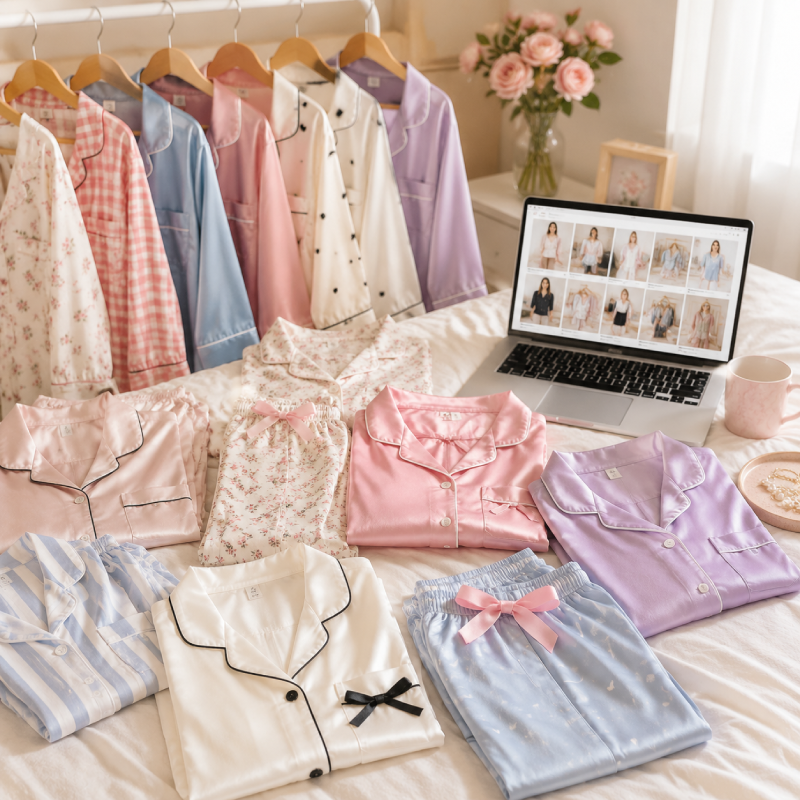
You have probably typed “where to buy cute pajama sets” into a search bar at midnight, scrolling past pages of options that all start to look the same. Maybe you want something that feels special — not just another pair of sweatpants repurposed as sleepwear. Or maybe you run a boutique and you are tired of seeing the same three wholesale catalogs every other shop is pulling from.
Either way, you are in the right place. This guide covers both sides of the question: where everyday shoppers can find pajama sets worth buying, and where brands and retailers can source sleepwear collections that actually stand out on the rack.
Key Takeaways
Cute pajama sets sit at the intersection of three things customers actually care about: visual appeal, fabric comfort, and perceived quality. Miss any one of those, and the set underperforms — whether on your body or on your shelf.
For individual shoppers, the best sources break down into DTC sleepwear brands (premium, curated), multi-brand retailers (variety, easy returns), marketplaces (endless options, mixed quality), and off-price channels (deals, but unpredictable inventory).
For brands and boutiques, sourcing cute pajama sets means choosing between generic wholesale platforms, textile trade shows, or direct manufacturer partnerships — and the quality gap between these approaches is where margins are won or lost.
Fabric choice is the single biggest predictor of whether a pajama set feels cute or cheap. Cotton, modal, bamboo blends, and well-made polyester satin each have distinct trade-offs in drape, breathability, and print vibrancy.
Construction details — flatlock seams, reinforced stress points, consistent pattern matching at plackets and pocket flaps — are what separate a 15 set from 50 set, even when both use the same labeled fabric content.
- Friendtex offers brand buyers a direct path to cute, compliance-ready pajama sets manufactured with consistent quality control, eliminating the guesswork that comes with sourcing from unvetted suppliers.
Why Cute Pajama Sets Matter More Than You Think
The Rise of “Sleepwear as Self-Care”
A decade ago, pajamas were mostly an afterthought — something you grabbed from the clearance bin or received as a holiday gift and wore until the elastic gave out. Today, sleepwear occupies a completely different space in the consumer mindset. It has become an extension of personal style, a small daily luxury, and — for the Instagram and TikTok generation — content.
The numbers back this up. The global sleepwear market has grown steadily, driven partly by the work-from-home shift that blurred the line between loungewear and pajamas, and partly by a broader cultural turn toward comfort-driven consumption. When people spend more time at home, they spend more money on what they wear at home. A cute pajama set is no longer just for sleeping — it is for morning coffee, video calls from the couch, and the kind of lazy Sunday that deserves an outfit.
This shift changes what “cute” means. It is no longer just about a novelty print or a matching top and bottom. Today’s buyer expects pajamas that photograph well, feel luxurious against the skin, and hold up after repeated washing. The bar has risen — and that is good news for brands that know how to meet it.
What Actually Makes a Pajama Set “Cute”
Before we talk about where to buy, let us define what you are actually shopping for. “Cute” sounds subjective — and to some degree it is — but there are concrete design elements that consistently drive the “cute” perception across demographics and markets.
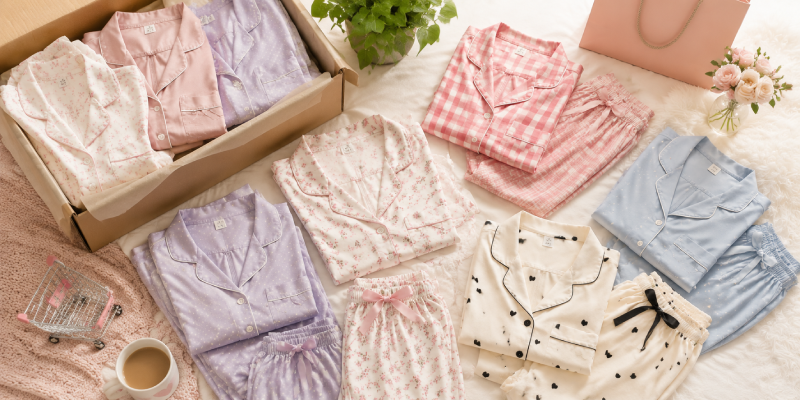
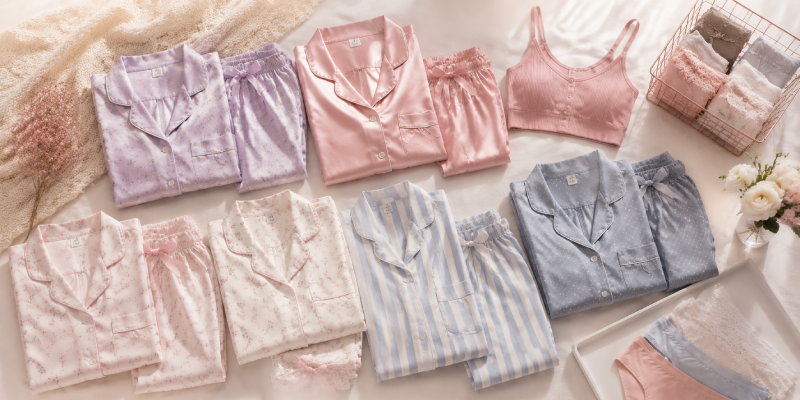
Color palette. Soft pastels, warm neutrals, and playful-but-not-juvenile prints dominate the cute pajama category. Think blush pink, sage green, butter yellow, lavender, and classic blue stripes. Bold neons or muddy browns rarely register as cute in sleepwear — they read as sporty or utilitarian instead.
Print scale and motif. Smaller-scale prints — delicate florals, micro polka dots, ditsy fruits, subtle animal motifs — read as cuter than large, loud patterns. The print should feel like a detail, not a statement. Matching across the top and bottom is non-negotiable for the classic cute pajama set look.
Silhouette. The most consistently popular cute pajama silhouettes include the notch-collar button-down set with piped trim, the relaxed short-sleeve button-up with elastic-waist shorts, and the classic long-sleeve pullover with cuffed jogger-style bottoms. Oversized fits with delicate details — lace trim, shell buttons, subtle embroidery — often outperform skin-tight or shapeless cuts.
Fabric hand feel. This is where many pajama sets fail the cute test. A print can look adorable on screen, but if the fabric feels stiff, scratchy, or plasticky in person, the cute impression collapses on first touch. Softness is not optional — it is the entry ticket.
Where to Buy Cute Pajama Sets: Consumer Channels
Direct-to-Consumer Sleepwear Brands
DTC sleepwear brands have effectively reshaped the pajama market over the past five years. These companies sell exclusively (or primarily) through their own websites, control their entire brand experience, and tend to invest heavily in fabric quality and visual identity.
Brands like Eberjey, Lunya, Cozy Earth, and Printfresh have built loyal followings by treating pajamas as a core product category rather than a seasonal afterthought. Their sets typically range from 80 to 200, and the premium pricing is justified — at least in theory — by better fabric sourcing, more thoughtful design, and consistent sizing.
The trade-off is price and accessibility. Not everyone wants to spend $150 on pajamas, and DTC brands rarely run deep discounts. But if you are looking for a reliably cute set from a brand that lives and breathes sleepwear, this is the channel where you will find the highest hit rate.
What to expect from DTC sleepwear brands:
Curated seasonal collections with cohesive color stories
Detailed fabric content disclosure and care instructions
Sizing guides based on actual fit models rather than generic charts
Higher price points, but also higher consistency
- Frequent use of modal, Tencel, bamboo blends, and high-grade cotton
Multi-Brand Retailers and Department Stores
Nordstrom, Saks Fifth Avenue, Anthropologie, and similar retailers carry sleepwear from multiple brands under one roof — physically or digitally.
These retailers also tend to have generous return policies, which matters when buying pajamas online. Fit is famously tricky with sleepwear — what looks relaxed and effortless on a model can feel shapeless or restrictive on your body. Being able to return a set that does not work, without paying restocking fees or waiting weeks for a refund, reduces the risk significantly.
The downside is curation. Department store sleepwear sections can feel overwhelming, and the cute-to-frumpy ratio varies wildly. You will scroll past a lot of uninspired basics to find the gems. Filtering by brand — sticking to sleepwear-focused labels rather than general apparel brands that happen to make pajamas — helps narrow the field.
Marketplaces: Amazon, Etsy, and Beyond
Amazon is the largest pajama marketplace in the world by volume, but it is also the most inconsistent. You can find genuinely cute, well-made pajama sets on Amazon for under $40 — and you can also find sets that look identical in photos but arrive feeling like costume fabric. The key to shopping Amazon for pajamas is reading reviews obsessively, focusing on reviews that include customer photos, and filtering for items with at least a 4.3-star average across 100+ ratings.
Etsy occupies a different niche. It is the go-to platform for handmade, small-batch, and personalized pajama sets — linen sleepwear from Eastern European ateliers, custom embroidered cotton sets, vintage-inspired nightgowns. Prices run higher than Amazon but lower than most DTC brands, and the trade-off is longer shipping times and less standardized sizing. If you want pajamas that nobody else owns, Etsy is where you find them.
Other marketplaces worth mentioning: Shopbop (trend-focused, mid-to-premium), ASOS (fast fashion pricing, trend-driven designs), and Target (surprisingly strong sleepwear game at mass-market prices). Each has a distinct curation angle, and the right choice depends on your budget, timeline, and aesthetic preference.
Off-Price and Budget-Friendly Options
TJ Maxx, Marshalls, Nordstrom Rack, and similar off-price retailers are where cute pajama sets go when they did not sell through at full price. The inventory is unpredictable — you cannot count on finding a specific brand or style — but the deals are real.
The strategy for off-price pajama shopping is opportunistic browsing rather than targeted searching. Go in with an open mind, check the fabric content tag before buying (off-price retailers sometimes carry lower-quality diffusion lines made specifically for the channel), and be prepared to walk out empty-handed if nothing clicks. Forcing a purchase just because it is on sale is how dresser drawers fill up with pajamas that never get worn.
Consumer Channels at a Glance
Channel | Typical Price | Pros | Cons | Best For |
|---|---|---|---|---|
DTC Sleepwear Brands | 80–200 | Premium fabrics, consistent sizing, cohesive seasonal collections | High price, rare discounts | Shoppers who prioritize quality and are willing to invest |
Multi-Brand Retailers (Nordstrom, Anthropologie) | 40–300 | Wide variety, generous returns, compare brands side by side | Overwhelming selection, cute-to-frumpy ratio varies | Shoppers who want to browse multiple brands in one place |
Marketplaces (Amazon, Etsy) | 15–120 | Massive selection, competitive pricing, customer photo reviews | Inconsistent quality, sizing guesswork, counterfeit risk | Budget-conscious shoppers and those seeking unique handmade pieces |
Off-Price (TJ Maxx, Nordstrom Rack) | 15–60 | Deep discounts on premium brands, treasure-hunt appeal | Unpredictable inventory, may carry lower-quality diffusion lines | Deal hunters with flexible style preferences |
Where Brands Source Cute Pajama Sets: The B2B Side
Why Sourcing Matters for Cute Sleepwear
If you run a boutique, an online store, or a sleepwear brand, the question “where to buy cute pajama sets” means something different. You are not buying one set — you are buying inventory. And the source you choose determines not just your cost per unit, but your entire brand positioning.
A pajama set that looks cute in a supplier’s catalog photo can arrive in your shipment looking completely different — wrong colors, cheaper fabric, inconsistent sizing, details omitted to save cost. This happens constantly in sleepwear sourcing, and it is the fastest way to destroy customer trust. One batch of disappointing pajamas generates returns, negative reviews, and customer service headaches that erase whatever margin you thought you were protecting by choosing the cheapest supplier.
Smart sourcing for cute pajama sets means prioritizing consistency and communication over rock-bottom pricing. A supplier who sends accurate pre-production samples, responds to questions in clear detail, and can explain their fabric sourcing and quality control process is worth paying more for — because the alternative costs more in the long run.
Trade Platforms and Wholesale Marketplaces
Generic wholesale platforms aggregate thousands of suppliers across every product category imaginable — sleepwear is just one tile in a vast mosaic. The appeal is immediate: low per-unit prices, wide selection, and the ability to browse from a screen. The reality is more complicated.
The core problem with sourcing cute pajama sets from generalist platforms is accountability. A supplier who also sells phone cases, kitchen gadgets, and car accessories is not a sleepwear specialist — they are a trading company that happened to list pajamas. When quality issues arise, and they will, the response is often slow, evasive, or nonexistent. Pre-production samples that look perfect can give way to production runs that cut corners on fabric weight, stitching density, or print quality — because the supplier knows the buyer is thousands of miles away with limited recourse.
That said, not all platform-based sourcing is doomed. The suppliers worth working with share a few recognizable traits:
They specialize narrowly — their entire catalog is sleepwear, loungewear, or intimate apparel
They provide detailed technical specifications, not just photos: fabric composition by percentage, GSM, yarn count, dye method
They send physical samples promptly and those samples match the catalog listing
They can produce compliance documentation — GCC certificates, OEKO-TEX certifications, flammability test reports — without hesitation
- They communicate in clear, detailed English (or your language) and answer technical questions directly rather than deflecting
Even with a vetted supplier, the platform model has structural friction: MOQs tend to be rigid, customization options are limited to swapping colors on existing templates, and lead times can stretch unpredictably during peak seasons. For brands that need consistency, these are not minor annoyances — they are business risks.
Trade shows — MAGIC in Las Vegas, Intertextile in Shanghai, Première Vision in Paris — offer a different approach. You can touch the fabric, see the colors in person, and build relationships with suppliers face to face. The cost of attendance is higher, but for brands placing significant orders, the confidence gained from in-person evaluation is worth the investment.
The most reliable path, however, is working directly with a specialized sleepwear manufacturer — which is what the next section covers.
Working Directly with Sleepwear Manufacturers
The most reliable — and least visible — channel for sourcing cute pajama sets is working directly with a specialized sleepwear manufacturer. These companies do not typically advertise to consumers, and they may not even maintain a strong presence on trade platforms. They work through industry relationships, referrals, and long-term partnerships with brands.
Friendtex represents this model. As a sleepwear manufacturer with deep expertise in pajama production, Friendtex offers brand buyers a straightforward path to sourcing cute, compliant pajama sets without the filtering and vetting that trade platforms require. When you work directly with a manufacturer, you skip the intermediary steps — no generic catalog browsing, no guessing which factory actually made the sample, no language-barrier negotiations over WhatsApp.
The direct-manufacturer model also unlocks customization. You are not limited to whatever styles happen to be in a supplier’s catalog that season. You can specify fabric, print, trim, packaging, and sizing to match your brand’s identity — and because the manufacturer controls production end to end, quality is easier to maintain across orders.
B2B Sourcing Channels Compared
Channel | Typical MOQ | Quality Control | Customization | Lead Time | Best For |
|---|---|---|---|---|---|
Generic Wholesale Platforms | 50–500 pcs | Inconsistent — requires heavy vetting | Low — mostly stock designs | 2–6 weeks | First-time importers willing to absorb quality risk |
Trade Shows (MAGIC, Intertextile) | 100–1000 pcs | Tangible — you inspect samples in person | High — direct conversation with factory reps | 4–12 weeks | Brands placing significant orders who need supplier relationships |
Direct Manufacturer (Friendtex) | Negotiable per project | Consistent — end-to-end production control | Full — fabric, print, trim, packaging, sizing | 2–6 weeks | Brands prioritizing quality, compliance, and long-term partnership |
The cost of choosing the wrong channel is not just the unit price — it is chargebacks, returns, negative reviews, and the slow erosion of customer trust that comes from inconsistent product quality. A direct manufacturer relationship amortizes its higher upfront coordination cost across every trouble-free order that follows.
What to Look for When Buying Cute Pajama Sets
Fabric: The Foundation of Cute and Comfortable
Fabric is where most pajama shopping mistakes happen. A set can have the perfect print and a flattering silhouette, but if the fabric does not feel good against your skin, you will reach for something else every night.
Here is how the major pajama fabrics compare for the “cute and comfortable” standard:
Fabric | Softness | Breathability | Durability | Best Season | Price Level | Key Trade-Off |
|---|---|---|---|---|---|---|
★★★★☆ | ★★★★★ | ★★★★☆ | season | $–$$ | Wrinkles easily; blends with modal or spandex solve this | |
Modal / Tencel | ★★★★★ | ★★★★☆ | ★★★☆☆ | Spring–Fall | $$–$$$ | Silky drape and vibrant prints, but pills faster than cotton |
Bamboo Viscose | ★★★★★ | ★★★★☆ | ★★★☆☆ | Spring–Fall | $$ | Ultra-soft hand feel; eco claims need scrutiny on production process |
★★★★★ | ★★★★★ | ★★☆☆☆ | All-season | $$$$ | Luxurious and temperature-regulating, but delicate and high-maintenance | |
Polyester Satin | ★★★☆☆ | ★★☆☆☆ | ★★★★☆ | Fall–Winter | $–$$ | Shiny, wrinkle-free look at low cost, but traps heat and moisture |
Fleece / Flannel | ★★★★☆ | ★★★☆☆ | ★★★★☆ | Winter | $–$$ | Cozy warmth without bulk; polar fleece is lighter, flannel is more breathable |
Long-staple cotton — Pima, Supima, Egyptian — produces a noticeably smoother fabric than standard short-staple cotton and resists pilling better over time. For brands, the fabric choice directly shapes customer perception: a cute print on stiff, low-grade cotton reads as cheap no matter how charming the design.
Modal and Tencel take dye exceptionally well, which is why they dominate the premium sleepwear segment where print vibrancy is a selling point. Polyester satin dominates fast-fashion sleepwear because it delivers high visual impact at low material cost — shiny, smooth, and photogenic — but the breathability gap is real, and repeat customers notice.
For cold-weather cute, polar fleece (covered in detail in our dedicated guide) offers an exceptional warmth-to-weight ratio with minimal care demands, while cotton flannel’s brushed surface brings a classic cozy aesthetic that photographs well in lifestyle settings.
Fit and Sizing: Cute Should Not Mean Uncomfortable
The most common pajama sizing complaint is not that a set is too small — it is that the proportions are wrong. Sleeves that are too short, pants that are too long, a top that fits in the shoulders but gapes at the chest. These issues are not about the size label; they are about pattern-making decisions made during design.
When evaluating pajama fit — whether for yourself or for your product line — pay attention to:
Shoulder seam placement.
It should sit at the edge of your shoulder, not halfway down your upper arm.
Sleeve length on long-sleeve tops.
The cuff should hit at the wrist bone, not halfway up the forearm.
Inseam on pants.
For women’s pajama pants, a 28–30 inch inseam fits most heights without dragging. Petite and tall options are a strong differentiator for brands.
Elastic waistband quality.
It should hold the pants up without digging in. Wide, fabric-covered elastic waistbands are more comfortable and look more premium than narrow exposed elastic.
Button placement on button-down tops.
- The top button should sit at the collarbone, not at the throat. Spacing between buttons should be even — gaps that pull open are a sign of poor pattern grading.
Print and Pattern Quality
Print quality separates the cute pajama sets that last from the ones that look sad after five washes. Low-quality prints fade, crack, or peel — especially on polyester satin, where the print sits on the fabric surface rather than penetrating the fiber.
Signs of good print quality:
The print looks sharp and detailed, not blurry or pixelated
Colors are consistent across the set — the top and bottom match
On patterned sets with stripes or plaids, the pattern aligns at seams and plackets
After washing, colors stay vibrant with minimal fading
- The print does not feel stiff or plasticky on the fabric surface
For brands sourcing printed pajamas, ask your manufacturer about their printing method — it affects everything from color vibrancy to how the fabric feels against the skin.
Printing Method | Best Fabric | Durability | Color Range | Hand Feel | Relative Cost |
|---|---|---|---|---|---|
Reactive Digital | Cotton, Modal, Bamboo | ★★★★★ | Excellent — full spectrum, photorealistic | Soft — dye bonds into the fiber, no surface texture | $$ |
Sublimation | Polyester, Poly Blends | ★★★☆☆ | Good — vivid, but limited to synthetic whites/light bases | Smooth — ink becomes part of the fiber | $ |
Screen Printing | Cotton, Cotton Blends | ★★★★☆ | Moderate — solid colors, limited gradient capability | Slight surface texture — ink sits on top | $$–$$$ (setup cost per color) |
Reactive digital printing is the gold standard for natural-fiber pajamas: the dye chemically bonds into the fiber, so the print never feels stiff or plasticky. Sublimation is the workhorse for polyester satin sets — inexpensive and vivid, but expect noticeable fading after 15–20 washes. Screen printing makes sense for simple, bold designs with few colors, but the per-color setup cost adds up quickly on intricate patterns.
Construction Details That Separate Good from Great
Most people do not inspect pajama construction before buying — but they feel the difference within the first few wears. These details are invisible in product photos but immediately apparent in real life:
Seam type. Flatlock seams lie flat against the skin and do not create friction or irritation. They are more expensive to produce than basic overlock seams, which is why cheap pajamas skip them. For sleepwear — a category defined by comfort — seam quality matters disproportionately.
Reinforced stress points. The armhole seams, crotch seam, and waistband attachment points should have reinforcement stitching or bar tacks. Without it, these areas are the first to fail.
Buttons. Shell buttons or thick resin buttons with secure thread shanks feel premium. Thin, lightweight plastic buttons with loose threads feel disposable. Count the spare button — good pajama sets include one sewn into the care tag or hem.
Drawstring quality on pants. A flat cotton drawstring with finished tips beats a round, synthetic cord that frays after the first wash. Metal eyelets on the drawstring opening are a quality signal; raw-cut fabric holes are not.
- Hem finishing. Clean, even hems with consistent stitch length. Uneven hems, skipped stitches, or visible loose threads suggest rushed production.
Friendtex: Your Source for Cute Pajama Sets That Sell
What Sets Friendtex Apart
If you have read this far, you know that sourcing cute pajama sets — the kind that customers love and come back for — is not as simple as picking the prettiest photo in a catalog. It requires a manufacturer that understands fabric, fit, compliance, and consistency.
Friendtex is a sleepwear manufacturer that has invested in exactly those capabilities. The company produces pajama sets across a range of fabrics — cotton, modal blends, polar fleece, TC, and more — with attention to the construction details and print quality that separate premium sleepwear from generic alternatives.
Three things that differentiate Friendtex in the sleepwear sourcing landscape:
Compliance-ready production. Selling pajamas in the US means navigating CPSC regulations, flammability testing under 16 CFR Part 1610, and GCC documentation requirements. Friendtex manufactures to meet these standards, so you are not scrambling for test reports when your shipment arrives. For brands entering the US sleepwear market for the first time, this alone saves weeks of compliance work and eliminates the risk of blocked shipments.
Fabric expertise. Many general apparel manufacturers treat pajamas as an afterthought — the same factories, the same fabrics, just a different pattern. Friendtex specializes in sleepwear, which means the fabric selection, construction methods, and quality standards are built around what pajamas actually need: softness, breathability, durability through frequent washing, and consistent fit.
Customization without chaos. You can specify your prints, your trims, your packaging, and your sizing — and because Friendtex controls production directly rather than brokering between you and a factory, the version you approve in sampling is the version you receive in production. No surprises, no bait-and-switch.
Product Range and Customization
Friendtex’s pajama catalog covers the styles that consistently perform in the “cute pajama sets” category:
Classic notch-collar button-down sets with piped trim in cotton and cotton-modal blends
Short-sleeve and shorts sets for warmer seasons and climates
Long-sleeve and full-length pant sets for cooler months, available in cotton, fleece, and flannel
Loungewear-adjacent styles — relaxed-fit pullovers with coordinating bottoms
- Custom print development for brands that want exclusive designs rather than stock patterns
For boutique owners and brand buyers, the ability to start with a proven silhouette and customize the fabric, print, and trim means you can build a pajama collection that looks like your brand — not a generic catalog reorder.
Conclusion
Finding where to buy cute pajama sets depends on which side of the transaction you are on. For individual shoppers, the answer spans DTC sleepwear brands, multi-brand retailers, marketplaces, and off-price channels — each with distinct trade-offs in price, quality, and consistency. The common thread across all consumer channels is that fabric quality, construction details, and print integrity matter more than the brand name on the tag.
For brands and retailers, the sourcing question is higher-stakes. Your supplier choice determines your product quality, your compliance standing, your margin structure, and your ability to build a loyal customer base. Working with a specialized sleepwear manufacturer — one that understands the fabric, fit, and regulatory requirements unique to pajamas — eliminates the biggest risks in sleepwear sourcing.
Friendtex offers exactly that: a direct manufacturing partner for cute, compliant pajama sets, with the fabric expertise and quality control that brands need to compete in a crowded sleepwear market.
Ready to explore cute pajama sets for your brand? Browse Friendtex’s sleepwear collection or reach out to discuss custom designs and wholesale pricing.
FAQ
What is the best fabric for cute pajama sets?
There is no single best fabric — it depends on your priorities. Cotton is breathable, hypoallergenic, and gets softer over time, making it the most versatile choice. Modal and Tencel offer superior drape and a silky hand feel that photographs beautifully. For cold weather, polar fleece or cotton flannel provide warmth without sacrificing the cute factor. The key is matching the fabric to the season and the wearer’s comfort preference — and ensuring the fabric quality is high enough that the pajamas hold up through repeated washing.
Can I buy cute pajama sets in bulk for my boutique?
Yes — and this is where working with a specialized sleepwear manufacturer pays off. Generic wholesale platforms offer bulk pajama sourcing at low prices, but quality and consistency vary dramatically between suppliers, and the cost of a bad batch — returns, chargebacks, damaged reputation — can far outweigh the upfront savings. For a boutique that depends on customer satisfaction and repeat purchases, a direct manufacturer relationship — with pre-production samples, clear quality standards, and compliance documentation — is a more reliable path. Friendtex works with brand buyers to produce cute pajama collections at wholesale volumes, with customization options that help your boutique stand out.
How do I know if a pajama set is well-made?
Check four things: the seams (flatlock seams are more comfortable and durable than basic overlock), the fabric content tag (natural fibers or high-quality blends outperform cheap synthetics), the print alignment (patterns should match at seams, not look randomly cut), and the finishing details (even hems, secure buttons, no loose threads). If you are buying online, customer review photos are more informative than product page images — they show you what the pajamas look like after washing and wearing, not just fresh out of the package.
Are cute pajama sets only for women?
Not at all. The cute pajama category has expanded significantly across genders. Men’s pajama sets in playful prints, soft pastels, and matching top-and-bottom designs are increasingly common — brands like Printfresh, Desmond & Dempsey, and even mass-market retailers now offer coordinated cute pajama options for men. Kids’ pajamas have always leaned into the cute aesthetic with character prints, bright colors, and matching family sets. The broader trend is toward sleepwear as an expression of personality, regardless of who is wearing it.