The first time a European retailer asks a new supplier for “your BSCI report,” the request usually lands badly. It sounds like a certificate — something you either have or you don’t. It isn’t. It is a snapshot of a building on a particular day, graded on a scale that carries specific meaning, and it expires.
I have sat through these audits on the factory side for years: amfori BSCI, Sedex SMETA, WRAP, plus individual retailer programs. I have also watched buyers misread the results, which is worse than not having them. So here is the honest version — what each framework actually checks, what the report does and does not tell you, and the questions that separate a factory that is genuinely improving from one that is good at passing inspections.
If you want the product-side half of compliance instead — the fabric and finishing certifications that sit alongside a social audit — I have written separately about OEKO-TEX, GOTS and BSCI for pajamas. This article is about the building and the people inside it.
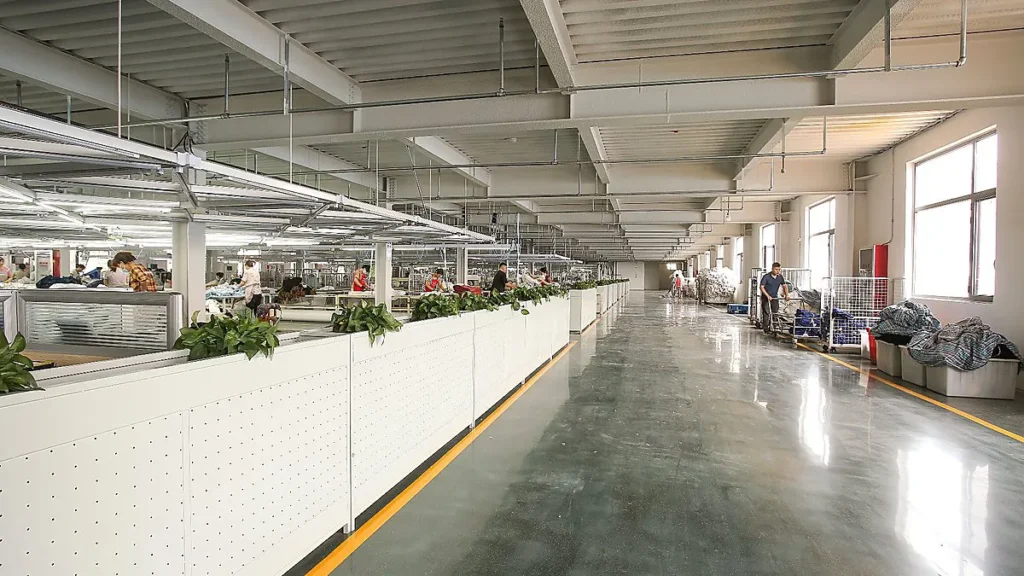
Why Social Compliance Audits Exist
The purpose is not to certify a factory as ethical. It is to create a documented, repeatable, third-party record of working conditions on a specific date, so that a brand can demonstrate it is making a real effort at due diligence — and so that problems have a paper trail with a deadline attached.
Three forces drive the demand:
- Retailer policy. Most large European and North American retailers will not onboard a new supplier without a valid social compliance audit from a recognized framework. For some, it is a hard gate before sampling — the same gate where they ask for your OEKO-TEX and GOTS certificates.
- Regulation. Due diligence legislation across Europe and the US is pushing responsibility for supply chain conditions down onto the brand, and the brand pushes the documentation requirement onto the factory.
- Risk. A labor or safety incident at a supplier is a brand crisis. A current audit report is insurance against the surprise.
For a sleepwear factory, this is settled reality: audits are a condition of doing business with serious buyers, not a differentiator. What differentiates factories is how they perform over repeated audits.
The Three Frameworks You Will See Most
| amfori BSCI | Sedex SMETA | WRAP | |
|---|---|---|---|
| Who runs it | amfori (Brussels-based global business association) | Sedex (platform); audits by approved third-party firms | Worldwide Responsible Accredited Production (independent, US-founded) |
| Structure | 13 Performance Areas, 81 underlying questions | 2-Pillar or 4-Pillar report | 12 Principles |
| Output | Rating A – E (not a certificate) | Audit report, no letter grade | Certificate of Compliance (since March 2026) |
| Validity | Up to 2 years depending on rating | Typically renewed annually per buyer requirement | 1 year (since March 2026) |
| Geography strength | Very strong in Europe | Very strong in UK/EU retail | Very strong in US retail and brands |
| Best for | European buyers | UK/EU buyers, shared-platform data | US buyers, brand-driven programs |
A critical point that trips up newcomers: BSCI does not certify. It rates. An A or B rating means the audited areas were found in good order on the audit date. There is no “BSCI certificate” to frame. (Confusingly, BSCI does appear in certification conversations — but as one of three schemes buyers usually ask about together, which is exactly why I separated them in this breakdown of OEKO-TEX, GOTS and BSCI.)
WRAP changed in March 2026. The old tiered structure (Platinum / Gold / Silver) has been retired. WRAP now issues a single Certificate of Compliance valid for one year, which simplifies the message but also removes the ability to signal “we scored above the minimum.” If a supplier tells you they hold “WRAP Gold,” they are describing a superseded status — worth asking them to confirm their current documentation.
What BSCI Actually Checks: The 13 Performance Areas
This is the framework most of our European buyers reference, so it is worth knowing the shape of it.
- Social management system and cascade effect — do you have a compliance system, and does it reach your own subcontractors?
- Workers’ involvement and protection — is there a functioning worker representation mechanism?
- Freedom of association and collective bargaining
- No discrimination
- Fair remuneration — wages, overtime rates, and whether they meet legal minimums
- Decent working hours — the source of most findings in this industry
- Occupational health and safety
- No child labour
- Special protection for young workers
- No precarious employment
- No bonded or forced labour
- Protection of the environment
- Ethical business behaviour
Each area breaks into questions, 81 in total, each scored. The areas where sleepwear factories most often take findings are working hours, occupational health and safety, and social management system — not because factories set out to fail, but because peak-season overtime is genuinely hard to control, and document discipline is genuinely hard to maintain.
The rating scale matters when you read the report:
| Rating | What it generally signals |
|---|---|
| A | Outstanding. Rare, and usually reflects a mature compliance system. |
| B | Good. The realistic target for a well-run factory. |
| C | Acceptable with findings. Most common outcome; requires corrective action. |
| D | Significant findings. Most retailers will not onboard without a re-audit. |
| E | Unacceptable. Effectively disqualifying until fully remediated. |
If you see a C, read the findings before you react. A C with two administrative findings and a clear corrective action plan is a better business partner than an A with an audit date three months before a major renovation.
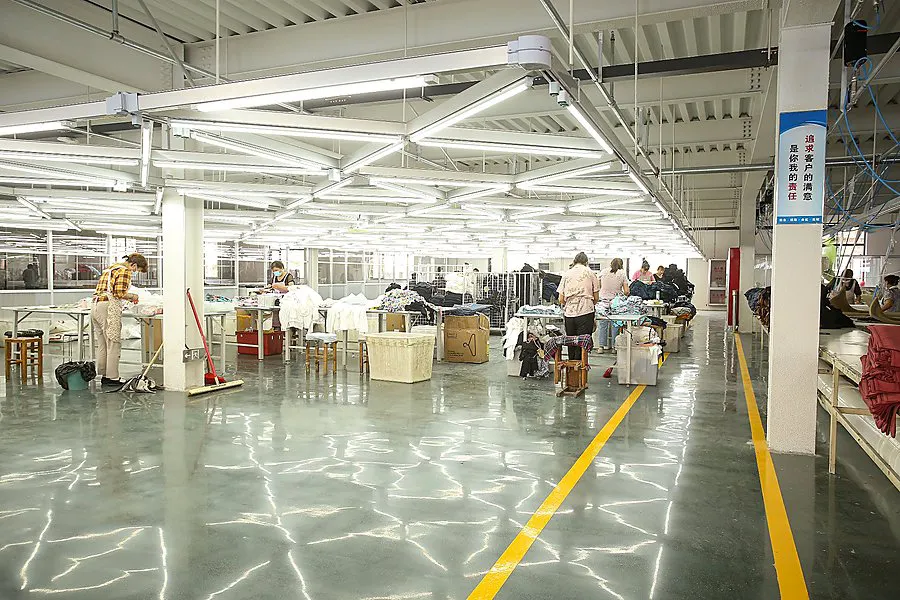
SMETA: The Two-Pillar and Four-Pillar Question
Sedex SMETA works differently from BSCI — it is an audit methodology, not a rating scheme. There is no A-to-E grade, which throws buyers who expect one.
The 2-Pillar audit covers:
- Labour standards (the ETI Base Code: freely chosen employment, freedom of association, safe working conditions, no child labour, living wage, working hours, no discrimination, regular employment, no harsh treatment)
- Health and safety
The 4-Pillar audit adds:
- Environment (2 additional modules)
- Business ethics (2 additional modules)
Which one do you need? If your buyer’s requirement mentions “SMETA 4-Pillar,” they want the environment and business ethics modules too — commonly because their own reporting obligations require it. Some buyers accept 2-Pillar for lower-risk suppliers. Confirm the required pillar count at the quotation stage, because it changes the audit duration, the number of auditor-days, and who pays for what.
Because SMETA reports sit on the Sedex platform, buyers can see findings from other customers’ audits of the same site. That shared visibility is the main reason UK and EU retailers ask for it: a supplier’s whole audit history travels with them.
WRAP: The 12 Principles
WRAP’s structure is the most explicit of the three, and two of its principles are genuinely distinctive.
- Compliance with laws and workplace regulations
- Prohibition of forced labour
- Prohibition of child labour
- Prohibition of harassment and abuse
- Compensation and benefits
- Hours of work
- Prohibition of discrimination
- Health and safety
- Freedom of association and collective bargaining
- Environment
- Customs compliance — that shipments are accurately declared and origin rules respected
- Security — that facilities meet supply chain security standards (C-TPAT-aligned)
Principles 11 and 12 are the reason WRAP is popular with US importers: they cover customs and facility security, concerns that sit closer to the American buyer’s risk list than pure labor questions do.
WRAP audits focus on the social half of a compliance question, which is why they often run alongside a technical audit — a separate process covering product testing, construction, and quality systems. Do not assume one covers the other.
What an Audit Day Actually Looks Like
Buyers often imagine a single visit. It is a process:
| Step | Typical duration | What happens |
|---|---|---|
| Self-assessment | 1–2 weeks before | Factory completes the framework questionnaire and uploads documentation |
| Document review | 1–2 weeks before | Auditor reviews payroll, time records, contracts, insurance, certificates, and prior corrective actions |
| Opening meeting | 30–60 min | Scope, agenda, and worker interview arrangements confirmed |
| Site walkthrough | 2–4 hours | Every floor: production, cutting, knitting, storage, canteen, dormitories if present, fire systems, chemical storage, first aid |
| Management interviews | 1–2 hours | Compliance system, grievance mechanism, subcontractor oversight |
| Document deep-dive | 2–4 hours | Payroll reconciled against time records and production output |
| Closing meeting | 30–60 min | Preliminary findings communicated. Verbatim quotes from this meeting can appear in the report. |
| Corrective Action Plan | 30–90 days | Findings remediated, evidence submitted, follow-up audit scheduled |
Total on-site time: typically 6–10 hours, depending on factory size and pillars.
If you have never walked a production floor, the walkthrough is easier to follow if you know what happens at each stage of a pajama factory — cutting, sewing, finishing, packing. Auditors walk the same route you would.
Two details from the factory side that buyers should know:
Worker interviews are the audit. Auditors select workers privately and ask about hours, wages, treatment, and whether they know how to raise a complaint. This is where a factory that “prepares documents” gets exposed. It is also why a genuine compliance culture beats a rehearsed one — you cannot script 200 people into consistency.
Everything at the closing meeting is on the record. Auditors write down what is said, including explanations offered in the moment. Factual, documented answers serve you better than optimism.
The Findings You Will Actually See
Across frameworks, the same categories recur in garment factories:
Working hours. Overtime beyond legal limits, rest-day shortfalls at peak, and — most commonly — a mismatch between recorded hours, paid hours, and output. Auditors triangulate: they compare payroll records, attendance records, and production output, and they look for the arithmetic that doesn’t close.
Health and safety. This is where checklists get specific, and buyers should understand what good looks like:
- At least two exits from each floor, unobstructed, with emergency lighting
- Fire extinguishers serviced and positioned (roughly one per 600 sq ft is the working rule)
- Documented fire drills with attendance records
- Machine guarding on cutting, sewing, and pressing equipment
- Adequate toilets (approximately one per 25 workers) and clean drinking water
- Chemical storage with current Safety Data Sheets, secondary containment, and PPE
- First-aid trained staff and stocked stations on each floor
- Needle control procedures, for products like children’s sleepwear — the same control we describe in our pajama quality control checklist
Social management system. The findings that look boring and matter most: an expired certificate, a grievance log with no resolution entries, a subcontractor working without being declared, a corrective action from the last audit not closed out.
Wages and employment. Payment below legal minimum, inaccurate overtime rate calculation, missing contracts, excessive probationary employment, and in-kind deductions that push effective pay below the standard.
How to Read an Audit Report Like a Buyer
The report is a document with a date. Here is how to interrogate it:
- Check the date and validity window first. A two-year-old report on a factory that has since doubled headcount describes a different operation.
- Check the scope. Does it cover the actual production unit that will make your order — or a different facility in the group, or only one floor?
- Read the findings, not the rating. A C with three administrative findings and a closed corrective action plan can be a stronger partner than an A with everything dated last quarter.
- Look for repeated findings. The same finding in two consecutive audits is a management system problem, not an oversight.
- Ask whether subcontractors are declared and covered. Midnight-shift subcontracting is the classic blind spot: your report is clean, your goods are not made in the audited building.
- Confirm which pillars. “SMETA audited” without the pillar count tells you nothing about environment or business ethics coverage.
- Ask who paid. Factories pay for their own audits in most frameworks, and that is normal. Third-party independence comes from the auditor being accredited and separate from the factory, not from who writes the cheque.
One more that buyers rarely think to ask: does the factory’s social audit match its commercial reality? A compliance report that is two years old sits badly next to a quotation that has moved a long way since — and the reasons a price moves are usually legitimate, as I laid out in why pajama quotes differ between factories.
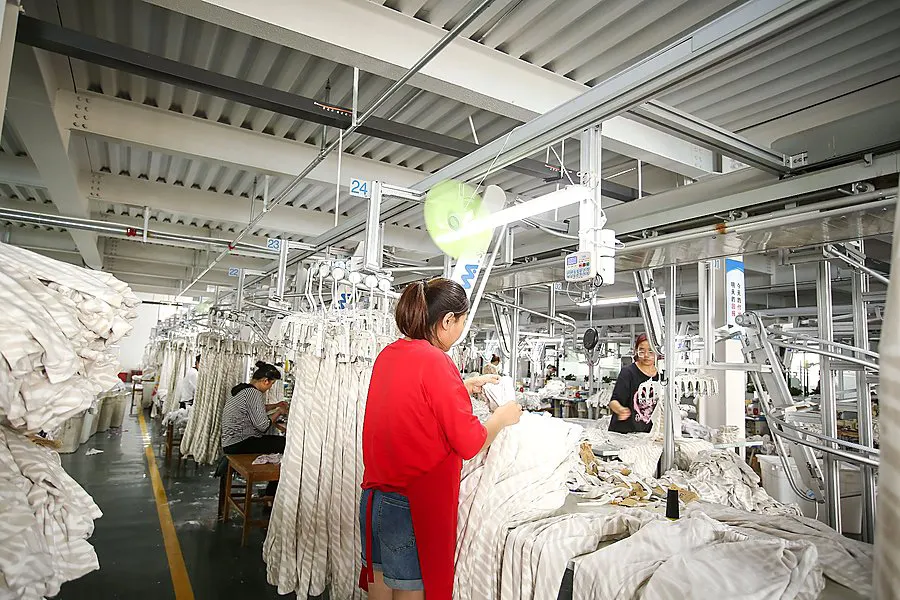
What to Ask a New Sleepwear Supplier
Bring these to your first call. The answers tell you more than the PDF does:
- Which frameworks are you currently audited under, and when does each expire?
- Can you share the full report, including the findings and the corrective action status — not just the summary page?
- Which production site does the audit cover, and is my order made there?
- Do you use subcontractors? Are they declared in the audit, and how are they monitored?
- How many worker interviews did the auditor conduct at the last audit, and were they private?
- Have any findings repeated across consecutive audits? What changed?
- Do you hold any technical or quality audits alongside the social audit, and how recent are they?
A factory that answers these in detail, including the parts that aren’t flattering, is a factory with a working compliance system. A factory that answers only the first one is telling you where its attention lives.## How We Approach It
We run our social compliance program as a continuous process, not an annual event: documentation maintained to audit standard every month, fire systems serviced on schedule, corrective actions tracked to closure, and worker interviews treated as information rather than interference. When auditors arrive, the goal is not to pass — it is that the audit day looks exactly like every other day, because the controls are already running.
If you are evaluating sleepwear suppliers and need audit documentation to take to your own compliance team, tell us which framework and which pillar count you require, and we will tell you plainly what we hold, what it covers, and when it renews.
If what you actually need first is a finished product you can put in front of a buyer, that is a different conversation — OEKO-TEX, GOTS and BSCI certification for pajamas covers the product-side paperwork.