If you are choosing between modal and bamboo for pajamas, you are comparing two soft, breathable fabrics with more in common than their marketing suggests. Both are usually regenerated cellulosic fibers: manufacturers dissolve plant-based cellulose and form it into new fibers. The biggest differences are the raw material, the fiber-making process, the finished fabric construction, and the documentation you can verify.
Here is the short answer: choose modal when you want a smooth, polished hand, strong color performance, and reliable shape retention. Choose bamboo viscose when you want a fluid, cozy drape and a familiar plant-based story for relaxed sleepwear. But do not approve either fabric from the fiber name alone.
The blend, yarn, knit, fabric weight, finishing, and wash performance can change the result more than the word on the label.
This modal vs bamboo guide helps you compare the two fabrics as a pajama wearer, a sleepwear brand, or a wholesale buyer. You will see where each material works well, where common claims become misleading, and what to test before you place a bulk order.
Key Takeaways
- Modal and the bamboo fabric used in most pajamas are regenerated cellulosic fibers, not untreated natural fibers.
- “Bamboo pajamas” are commonly made from viscose or rayon derived from bamboo. Your fiber label and product copy should name the fiber accurately for the market where you sell.
- Modal usually gives you a smooth surface, clean drape, good dye uptake, and dependable recovery. Bamboo viscose often feels slightly fuller and more fluid, although construction can reverse that difference.
- Both fabrics can work for hot sleepers because they absorb moisture and feel comfortable against the skin. Air permeability, fabric weight, fit, and drying conditions matter as much as fiber content.
- Neither material is automatically antibacterial, hypoallergenic, non-toxic, or sustainable. Ask for product-specific test reports and supply-chain evidence before you make those claims.
- For a pajama collection, compare approved swatches and finished samples after washing. A specification sheet tells you what a fabric is; testing shows you how it will behave.
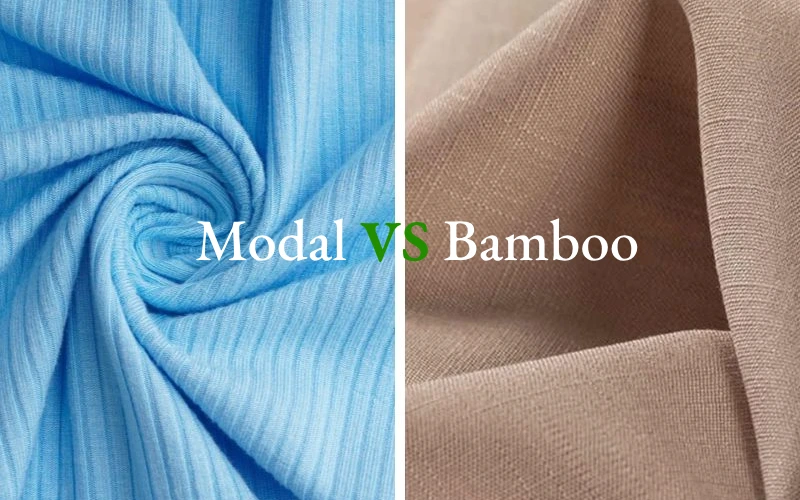
What Are You Really Comparing?
The phrase “modal vs bamboo” sounds like a comparison between two natural plants. In finished apparel, that is not quite what you are buying.
Modal fabric is a type of rayon made from regenerated cellulose. Beech wood is a common feedstock, especially for branded modal fibers, but you should verify the actual fiber producer and source instead of assuming every modal fabric has the same origin or environmental profile. Modal is engineered for good wet strength, softness, and dimensional stability, which makes it useful for underwear, T-shirts, loungewear, and pajamas.
Most soft “bamboo fabric” used in sleepwear is bamboo viscose or rayon made from bamboo. The bamboo plant supplies cellulose, but a chemical process turns that cellulose into rayon fiber. Mechanically processed bamboo bast fiber also exists, but it is rarer, more textured, and not the silky jersey most shoppers picture when they hear “bamboo pajamas.”
This distinction matters for both quality and compliance. In the United States, the Federal Trade Commission’s bamboo textile guidance says rayon or viscose made from bamboo must be described as such unless the product is made directly from actual bamboo fiber. If your care label says “95% bamboo” while the test report identifies viscose, you have a labeling problem before you have a marketing problem.
Modal vs Bamboo at a Glance
| Buying factor | Modal | Bamboo viscose or rayon |
| Typical cellulose source | Wood pulp, often beech | Bamboo pulp |
| Fiber family | Regenerated cellulosic fiber; a type of rayon | Regenerated cellulosic fiber; usually viscose/rayon |
| Hand feel | Smooth, silky, often cool to the touch | Soft, fluid, often slightly fuller or cozier |
| Drape | Clean and elegant | Relaxed and flowing |
| Moisture comfort | Absorbent and breathable | Absorbent and breathable |
| Shape retention | Often strong, depending on blend and knit | Can relax or grow if the fabric is light or poorly stabilized |
| Color performance | Usually strong dye uptake and rich shades | Good dye uptake; batch consistency still needs approval |
| Common pajama uses | Fitted sets, camisoles, nightdresses, polished loungewear | Relaxed sets, baby sleepwear, maternity styles, robes, sleep sacks |
| Care | Cold or cool gentle wash; low heat | Cold gentle wash; low heat or air dry |
| Main sourcing risk | Treating all modal as the same grade or source | Inaccurate fiber naming and unverified green or antibacterial claims |
The table gives you a useful starting point, not a purchase specification. A 180 GSM modal-spandex jersey can feel firmer and springier than a 220 GSM bamboo-viscose jersey. Change the stitch, yarn count, elastane percentage, finishing, or compacting process, and you change the wearing experience.
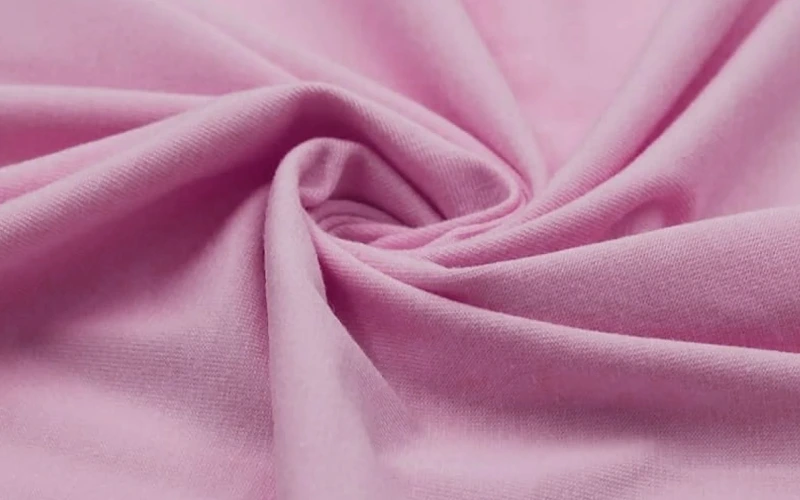
How Do Modal and Bamboo Feel in Pajamas?
Softness and Surface Feel
Both fabrics can feel exceptionally soft. Modal usually has a smooth, even surface with a clean, almost polished glide. That makes it a natural fit when you want pajamas to look refined as well as comfortable. It works particularly well for slim pajama pants, button-front sets, camisoles, and nightdresses that need an elegant fall.
Bamboo viscose often feels soft with a little more body and fluidity. In a medium-weight jersey, it can create the relaxed, “wrapped in comfort” feeling that shoppers expect from lounge sets, robes, and baby sleepwear.
You should still compare the actual fabrics side by side. Softening finishes can make a sample feel impressive on day one but change after laundering. Ask for an unfinished or production-representative swatch when possible, then wash it according to the proposed care label.
Drape and Fit
Modal tends to give you a controlled, clean drape. When blended with elastane, it can follow the body without feeling stiff. This is useful for modern women’s pajamas, fitted tops, soft waistbands, and loungewear that may be worn outside the bedroom.
Bamboo viscose tends to create a looser, flowing silhouette. That quality suits wide-leg pants, oversized tops, maternity sleepwear, robes, and garments where ease is part of the design. A very fluid fabric can also grow at the knees, seat, or hem, so check recovery and garment measurements after wear and washing.
Your pattern must match the fabric. If you move the same pattern from cotton jersey to a softer cellulosic knit without adjusting ease, stretch, recovery, and seam support, the final pajamas may hang longer or feel larger than expected.
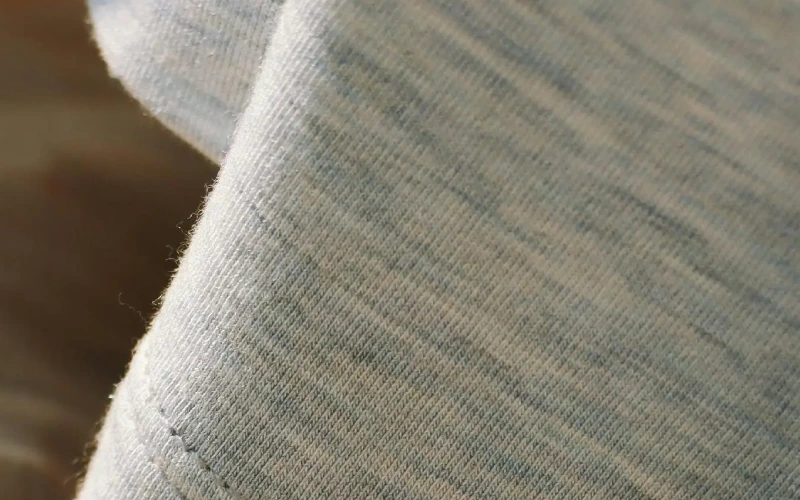
Which Fabric Is Cooler and More Breathable?
Modal and bamboo viscose are both good candidates for warm-weather pajamas. They absorb moisture, feel smooth against the skin, and can be more comfortable than a dense synthetic fabric in humid conditions. However, claims that one is always “more breathable” than the other are too simple.
Breathability is a property of the finished fabric, not just the fiber. These details all influence how cool the pajamas feel:
- Fabric weight in GSM
- Knit or weave structure
- Yarn count and twist
- Brushing or surface finishing
- Fiber blend and elastane percentage
- Garment fit and ventilation
- Room temperature and humidity
For hot sleepers, a lightweight single jersey with an easy fit may outperform a heavier fabric made from the supposedly cooler fiber. You should ask for air-permeability and moisture-management data when cooling is central to your product promise. At minimum, wear-test the finished garment in the conditions your customer is likely to experience.
If you are buying for yourself, focus on a loose cut, a light fabric, and care that removes perspiration and detergent residue. If you are developing a collection, define “cooling” in measurable terms before you print it on a hangtag.
Moisture Management and Odor Claims
Both modal and bamboo viscose are hydrophilic, which means they readily absorb moisture. That can help pajamas feel less clammy than a fabric that traps sweat on the skin. Absorption is only part of the story, though. A fabric also needs to move moisture through its structure and dry at a useful rate.
Do not assume bamboo-derived rayon retains the natural antibacterial properties sometimes associated with the bamboo plant. Regeneration changes the original plant material. The FTC also advises companies to have reliable scientific evidence for antibacterial and environmental claims connected with bamboo textiles.
If odor control is important for your sleepwear line, request testing on the finished fabric after the number of wash cycles you plan to claim. A treatment that performs on an unwashed swatch may not provide the same result after repeated laundering. You should also identify whether the result comes from the fiber, a finish, or a separate antimicrobial treatment.
For reader-friendly product copy, “soft, absorbent, and comfortable in warm conditions” is usually safer than an unsupported promise that the pajamas prevent bacteria, eczema, allergies, or odor.
Durability, Pilling, Shrinkage, and Shape
Modal often has an advantage when you need a smooth fabric to keep its shape and color through regular washing. High-quality modal knits can show good wet strength, dimensional stability, and recovery, especially when the fabric specification and finishing are controlled.
Bamboo viscose can also wear well, but quality varies widely between mills, yarns, weights, and blends. Lightweight fabrics may relax, twist, or shrink if they are not properly stabilized. Heavier fabric is not automatically more durable either; loose knitting and weak recovery can still produce bagging or seam distortion.
Pilling claims are especially risky because pilling is not determined by fiber name alone. Fiber length, yarn twist, knit density, surface brushing, blend composition, friction, and laundering all affect the result. Instead of accepting “anti-pilling” as a sales phrase, set a test method and minimum grade.
Before bulk production, compare:
- Dimensional change after the specified wash and dry cycles
- Spirality or side-seam twisting
- Pilling and abrasion resistance
- Stretch and recovery at the waist, knee, elbow, and seat
- Colorfastness to washing, rubbing, and perspiration
- Seam appearance and strength after laundering
- Surface feel before and after repeated washes
If a fabric passes these checks, it is a better choice for your pajamas than a more fashionable fiber name that fails them.
Color, Printing, and Collection Design
Modal is known for taking dye well, which can help you create rich solids and a polished surface. It is a strong option for jewel tones, dark neutrals, tonal collections, and sleepwear designed to keep a premium appearance after washing.
Bamboo viscose can also produce attractive color and prints. Its fluid hand works well for soft florals, nursery prints, relaxed stripes, and nature-led collections. Because regenerated cellulosic fabrics can be sensitive to processing conditions, you should approve lab dips, strike-offs, and bulk shade under an agreed light source.
For either fabric, confirm:
- Color standard and acceptable shade tolerance
- Print method, scale, repeat, placement, and direction
- Colorfastness requirements
- White-ground opacity
- Risk of shade variation between fabric lots
- Whether the finishing process changes hand feel or dimensions
When you source custom modal pajamas or bamboo pajamas, your print and color approval should sit alongside the fabric specification. A beautiful strike-off is not enough if the bulk fabric shrinks, skews, or feels different.
Is Modal or Bamboo Better for Sensitive Skin?
Both fabrics can feel gentle because their surfaces are smooth and soft. A low-friction fabric, flat seams, tagless labeling, and a clean finish may make pajamas more comfortable for people who dislike rough textures.
Still, “soft” is not the same as medically hypoallergenic. Skin comfort depends on dyes, finishes, detergents, residual substances, seams, elastic, labels, and the wearer’s individual sensitivity. If you are producing baby pajamas or marketing to sensitive-skin customers, ask for finished-product evidence rather than relying on the plant source.
OEKO-TEX STANDARD 100 indicates that a certified textile has been tested for harmful substances within the standard’s scope. It does not automatically prove that a product is organic, antibacterial, environmentally preferable, or suitable for every person with eczema or allergies. Check the certificate number, holder, product class, covered article, and validity.
Sustainability: Look Past the Plant
The sustainability question is where modal vs bamboo comparisons most often go wrong. Bamboo grows quickly, and wood is renewable, but the crop or forest is only the beginning of the fiber’s impact.
For both materials, you need to look at:
- Where the cellulose feedstock comes from
- Whether forestry or land sourcing is independently verified
- Which chemical process the fiber producer uses
- How solvents, air emissions, and wastewater are managed
- Energy source and production efficiency
- Dyeing, finishing, and wastewater controls at the fabric mill
- Garment durability and realistic product life
- Traceability from fiber producer to finished order
Do not describe all modal as closed-loop or all bamboo as eco-friendly. Modal can come from a producer with strong wood sourcing, traceability, and process controls, or from a supply chain with limited documentation. Bamboo viscose can come from a carefully managed facility or from one that gives you little evidence beyond a generic certificate.
You can explore the topic further in Friendtex’s guides to modal sustainability and bamboo fabric sustainability. For your own product page, use specific, scoped language: name the fiber, identify the certification or verified practice, and avoid implying that one document proves the entire product is sustainable.
Care: How Do You Keep Both Fabrics Soft?
Modal and bamboo-viscose pajamas usually benefit from similar care:
- Wash in cold or cool water on a gentle cycle.
- Use a mild detergent and avoid chlorine bleach unless the care specification allows it.
- Turn printed or dark garments inside out.
- Avoid overloading the machine, which increases friction and wrinkling.
- Air dry when practical, or tumble dry at low heat.
- Remove the pajamas promptly and reshape them if needed.
- Follow the garment’s tested care label rather than a generic fiber rule.
High heat can increase shrinkage, weaken elastane, set wrinkles, and change the hand feel of either fabric. Fabric softener may leave residue and affect moisture performance. If your bamboo style needs more detailed care instructions, link customers to your guide on how to wash bamboo pajamas.
For a brand, the care label should be based on testing the actual color, print, trims, elastics, and finished garment. Do not copy a care instruction from another style just because the fiber content looks similar.
Which One Should You Choose for Your Pajama Line?
Choose modal when your priority is:
- A sleek, smooth hand
- Clean drape for fitted or polished silhouettes
- Strong color depth and a refined surface
- Shape retention for frequently worn loungewear
- Premium women’s sets, camisoles, nightdresses, or modern basics
Choose bamboo viscose when your priority is:
- A relaxed, fluid, cozy feel
- Soft lounge sets, robes, maternity sleepwear, or sleep sacks
- A nature-led collection story supported by accurate fiber naming
- Easy-fitting silhouettes where drape matters more than sharp structure
- A familiar category that your existing customers already request
Consider developing both when your buyers serve different climates, silhouettes, or price positions. You could use modal for a polished core collection and bamboo viscose for relaxed family, maternity, or lounge-focused styles. Keep the architecture clear so customers understand why each fabric belongs in the range.
If you are still unsure, do not decide from a catalog image. Ask your manufacturer for comparable swatches in a similar GSM and construction, then develop samples in the same size. Wear, wash, measure, and compare them under the same conditions.
A Practical Sourcing Checklist for Modal vs Bamboo
Before you approve either fabric, ask your supplier these questions:
- What is the exact generic fiber composition and percentage?
- Who produced the fiber, yarn, and fabric?
- Is the “bamboo” component viscose, rayon, lyocell, modal, or mechanically processed bast fiber?
- What are the fabric construction, yarn count, GSM, usable width, stretch, and recovery?
- Which finishes or treatments are applied?
- Which certificates cover this exact material, color, facility, or finished product?
- Can you provide current certificate numbers and scope?
- What are the tested shrinkage, spirality, pilling, colorfastness, and dimensional-stability results?
- Does the fabric performance remain acceptable after repeated laundering?
- What are the fabric, color, print, and production minimums?
- How will bulk shade and hand feel be controlled against the approved standard?
- What fiber wording and care instructions should appear on the destination-market label?
When you request a custom sample, send your target market, garment type, preferred feel, GSM range, color or print, size range, quantity, testing needs, and target delivery date. That brief gives your wholesale pajama manufacturer enough context to recommend a fabric instead of simply sending the softest swatch in the room.
Modal vs Bamboo FAQs
Is modal better than bamboo?
Modal is better when you want a smooth surface, polished drape, rich color, and dependable shape retention. Bamboo viscose may be better when you want a fuller, fluid hand for relaxed pajamas. The better choice is the fabric that meets your tested performance, price, care, and traceability requirements.
Is bamboo more breathable than modal?
Not automatically. Both fibers can make breathable pajamas, but air permeability depends heavily on fabric weight, knit structure, finishing, stretch content, and garment fit. Compare finished fabrics at a similar GSM before you choose.
Which is better for hot sleepers: modal or bamboo?
Both can work well. Look for a lightweight, breathable construction and a relaxed silhouette. If cooling is a core promise, ask for air-permeability and moisture-management testing rather than relying only on fiber content.
Does modal shrink more than bamboo?
Either fabric can shrink if it is not properly stabilized or if it is exposed to heat. Modal often shows good dimensional stability, while bamboo viscose may need particularly careful compaction and wash testing. The only reliable answer comes from the test result for your exact fabric and care method.
Do bamboo pajamas have antibacterial properties?
You should not assume they do. Bamboo-derived rayon does not automatically retain the properties of the original plant. Any antibacterial or odor-control claim should be supported by reliable testing on the finished fabric, ideally after repeated wash cycles.
Which fabric is more sustainable?
Neither fiber name guarantees a lower-impact product. Review feedstock sourcing, fiber production, chemical and wastewater controls, mill processing, certifications, traceability, durability, and transport. A well-documented modal supply chain may be preferable to an opaque bamboo-viscose one, and the reverse can also be true.
Can you blend modal and bamboo with other fibers?
Yes. Cotton can add a drier, more familiar hand; elastane can improve stretch and recovery; and other cellulosic fibers can change drape or moisture behavior. Every blend changes labeling, care, cost, and performance, so test the final construction rather than assuming the benefits simply add together.
Conclusion
The most useful answer to modal vs bamboo is not that one fabric wins every category. Modal often gives you a smooth, refined finish with reliable color and shape. Bamboo viscose often gives you soft, relaxed drape and a cozy hand. Both can make excellent pajamas, and both can disappoint when the yarn, knit, finishing, labeling, or quality control is weak.
Start with the customer and the silhouette. Then compare equivalent fabrics, verify the fiber wording and documents, and test the finished pajamas after laundering. That process gives you a collection you can describe honestly and reorder with confidence.
If you are developing modal, bamboo-viscose, or blended sleepwear, Friendtex can help you compare fabric options, build samples, review labels and care instructions, and prepare your style for bulk production. Share your tech pack, target market, quantity per color, preferred hand feel, and required test standards to start a practical fabric discussion.