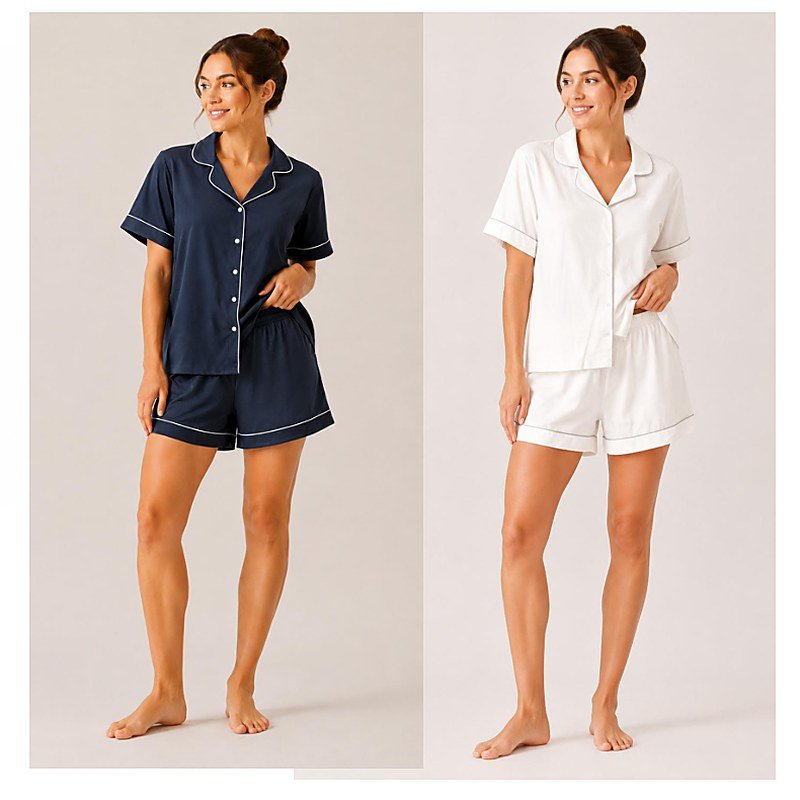
When I sit down to talk about our longest-running buyer — and to explain what a real sleepwear manufacturer partnership looks like — I always start with the same number: 7,000 pieces.
That was the size of the very first order they placed with us in 2004 — seven men’s underwear styles, roughly 1,000 pieces per style across four sizes. More than twenty years later, that same buyer ships millions of pieces a year across men’s underwear, men’s and women’s sleepwear, and children’s underwear. Their annual business with Friendtex now sits in the eight-figure USD range. They have become one of the most important accounts in our factory.
None of that was obvious on the afternoon of that first meeting. In fact, we almost said no.
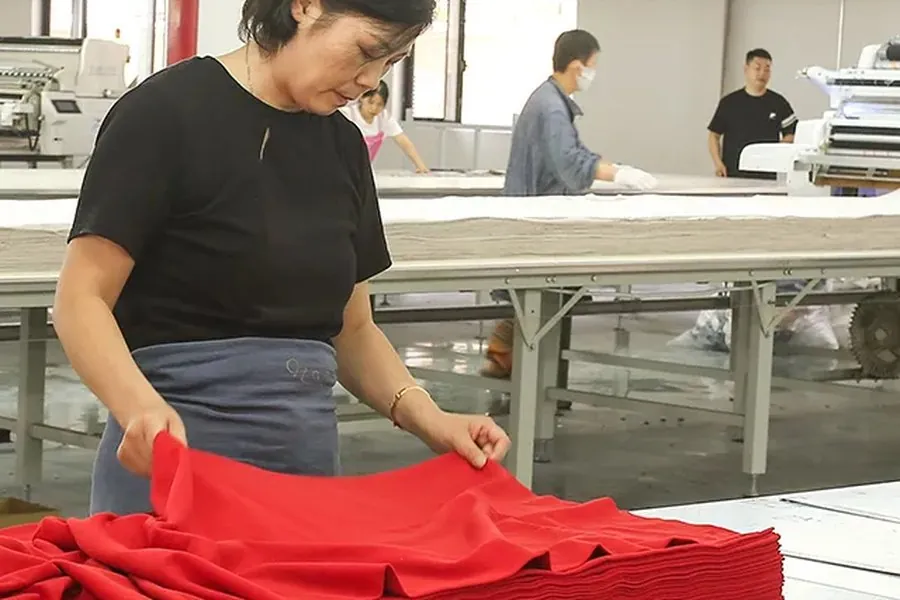
Who the Buyer Is
Our partner is a mid-to-high-end retail chain in Chile that runs its own private label. They operate brick-and-mortar stores across the country and have built a reputation for offering the kind of construction quality, colorways, and silhouettes that Chilean shoppers used to associate only with imported European or US brands.
When we first met, the chain was already in business but still in an early growth phase. They had stores. They had a name. They were growing — but they were not yet a household word. And, crucially, underwear was not yet a category they made or sold. They were known for other apparel. Underwear was a new direction — and we were part of the very first push into it.
How We Met: A Blind Meeting in 2004
The introduction came from someone we already knew. A buyer who had worked with us at another brand had recently moved to this Chilean chain. She reached out and asked if we would be open to a meeting.
The first call was simple: “Come to a meeting. The buyer is going to ask about underwear. Bring samples.”
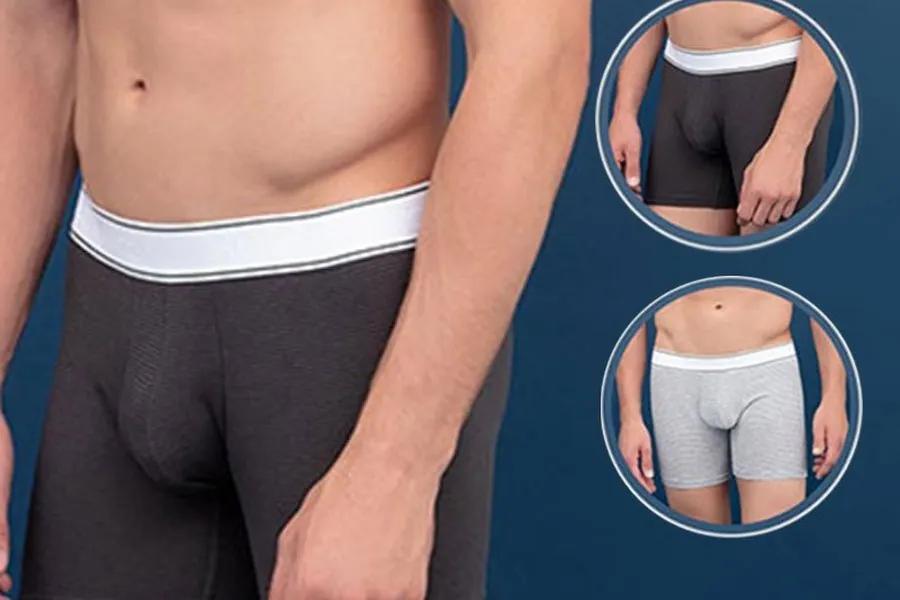
It was a blind meeting — neither side had worked with the other before. I brought a large sample case of products I thought might be relevant. When I arrived, the buyer opened her bag and pulled out a stack of samples from one of the most popular international underwear labels of that era — three or four styles of briefs and boxer-briefs in the classic colors and signature waistband trim that anyone in the industry would have recognized. She put them on the table and asked, very directly: “Can you make these? What’s your price?”
I had not quoted this kind of product before. I had not even seen the spec pack. I quoted on the spot. Looking back, the price I gave was lower than what we should have charged — I just didn’t know yet how much work it was going to be.
The First Order: 7 Styles, 7,000 Pieces, and a Loss We Took on Purpose
The launch order that followed was structured like this:
- 7 styles total — a mix of men’s briefs and boxer-briefs, plus two complementary T-shirt styles that fit the same color story
- Roughly 1,000 pieces per style, across four sizes
- A bespoke drawstring fabric pouch in the same print as the underwear, designed by the buyer’s own team, intended as a gift-with-purchase pack
On paper, the order was small. In practice, it was a nightmare.
The buyer wanted the look of the international brand — the same waistband, the same signature contrast stitching, the same red-trim-on-black-and-white color story. Our regular machines could not produce that stitching cleanly. To get the finish the buyer wanted, our technicians had to hand-finish every seam after the regular stitching step. That alone added hours per piece.
The buyer’s bespoke drawstring pouch cost roughly US$2–3 per piece — for an underwear in that price tier, the packaging alone was more expensive than the product inside. Our production lines didn’t want the order. The quantity was small, the specs were unfamiliar, the margin was thin, and the packaging was labor-intensive.
We took the loss and made the first container anyway. The alternative — losing the buyer before we had even shipped — felt worse.
Then came one of the small decisions that turned out to matter enormously.
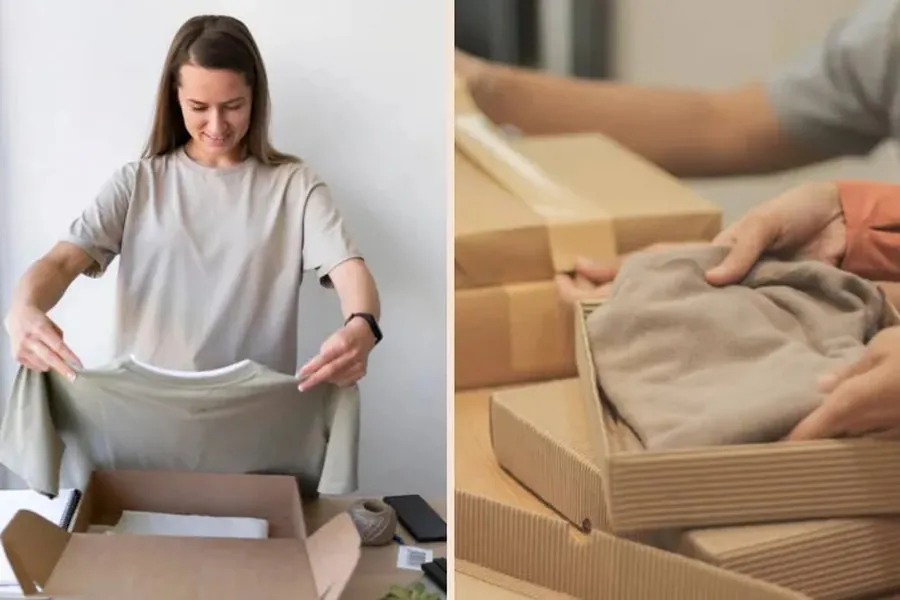
The buyer’s packaging design, while beautiful, was not viable at our price point. We sat down with her team and proposed a swap: instead of the custom drawstring pouch, we would use a clear poly-bag with a printed back-board — the same kind of pack you see hanging on a Uniqlo rack. The new pack cost roughly US$0.50–0.60 per piece, looked clean on the retail floor, and let us claw back enough margin to make the program work.
The buyer agreed. The first container shipped.
What Happened Next: A Local Hit
The launch did something we did not expect. Because the construction, colorways, and silhouette all matched what Chilean shoppers were already paying a premium for in imported international labels — and because the international label in question had not yet entered the Chilean market at that price point — the line became a runaway hit in the buyer’s stores.
Within a single season, the men’s underwear range had become the number-one selling single SKU in the buyer’s annual ranking across all categories — not just within underwear, but across the whole store. The buyer later told us that, in their internal product reviews, the underwear category was being talked about as the category that put the chain on the map in mid-to-high-end apparel.
That single order — the one we had almost turned down — became the foundation of a 20-year relationship.
From One Category to a Full Sleepwear Program
The underwear program opened the door, but it was the expansion into men’s sleepwear that turned us from a one-category supplier into a real partner.
Once the underwear was working, the buyer came back and said, “Now do the same for men’s pajama sets.” We did. The men’s sleepwear line — built on jersey, waffle, and coral fleece — also became a hit. From there, the brief kept growing:
- Women’s sleepwear and underwear for spring/summer and fall/winter
- Children’s underwear and sleepwear
- A growing share of seasonal gift-with-purchase and gift-pack products — special packaging for Christmas, Father’s Day, and Mother’s Day, including keepsake tins, resin figurines, and other small collectibles that the chain bundles into promotional campaigns
Many of the SKUs we developed together in those early years are still being reordered, season after season. Some of the gift-pack items the chain launched more than a decade ago are still on the shelf today. That kind of long-tail reorder is, in our experience, the most honest signal that a product has actually won a place in a retailer’s assortment.
How We Work Together Now
Twenty-plus years and many product cycles later, the rhythm of our partnership is very different from the early days.
The chain grew fast. Between roughly 2006 and 2016, they expanded at about 20% to 30% per year. Our orders grew with them. During peak promotional seasons, individual styles would hit 100,000 pieces in a single drop.
The reorder rhythm tightened steadily.
- After the first order, they came back about every six months.
- Within a few years, that shortened to once per quarter.
- Today, they place orders every one to two months.
The order mix is also more complex. They still do big seasonal drops, but they have layered in a small-batch quick-response model: when a new style is being tested or a store needs a fast refill, they can place a 500- or 1,000-piece order instead of waiting to bundle it into the next quarterly drop. To make that work, we pre-buy and hold greige fabric in our own warehouse so we can start cutting within days of receiving the PO. They get the speed of a local supplier; we get a long-term fabric commitment that lets us plan capacity.
The design direction is shared. The buyer’s team still drives most of the design, but we contribute:
- Seasonal trend presentations on color, fabric, and silhouette
- New fabric and finish proposals for upcoming seasons
- Packaging and gift-pack concepts for promotional campaigns
On the operational side, the numbers we are most proud of are simple:
- On-time delivery rate above 95% for this buyer, year over year
- A first-pass yield that the buyer’s QA team has described to us, in their own words, as “almost 100%” — full-batch rework on a reorder is extremely rare
A Word from the Buyer’s Circle
One of the moments that stays with me is not a contract or a sales number, but a private message.
In October 2022, a member of the buyer’s original team — who had since left the chain and moved abroad with her family — ran into someone from the chain’s current buying organization in Madrid. They exchanged a few messages, and she wrote to me:
“We were talking — you are the best vendor in pj”
“pj” is her playful shorthand for pajamas. The message was personal, off the cuff, between two old colleagues. But it captured something we hear over and over from people who have worked with this buyer: the work we put in on the very first order is still the work this buyer remembers.
What Other Brand Owners Can Take from This Story
I do not think there is a single formula in this story. The buyer, the market, and the products are specific to one Chilean retail chain. But a few things are general, and they are the things I would tell a new brand owner who is evaluating a long-term manufacturing partner:
- The first order is not a transaction — it is a sample of who you are. The first order is where a manufacturer shows you how they will behave when things are hard. A factory that walks away from a difficult launch is unlikely to be the factory that helps you recover from a delayed shipment three years later.
- Small changes in packaging can save a program. A US$2 bespoke pouch and a US$0.50 poly-bag look completely different on a buyer’s cost sheet. They can be the difference between a program that exists and a program that doesn’t.
- A long-term partner is built on rhythm, not on a single hero order. Going from “every six months” to “every one to two months” took more than a decade. Each step was a small commitment on both sides.
- Hold fabric for the buyer. Small-batch quick-response is the new normal in retail. The factories that can deliver 500-piece reorders in days, not months, will own the next decade of buyer relationships.
- Listen to the people who have left the buyer’s team. They will tell you, off the record, what the buyer’s official vendor scorecard will not.
A Final Note
This is a story I have wanted to tell for a long time, but I have held off until now because it involves a long-standing partner. The names, store count, and exact figures have been generalized to protect the relationship.
If you are a brand owner in a similar situation — building a category from scratch, looking for a manufacturing partner that will treat your first order like it matters, and willing to invest in a multi-year roadmap — I would love to hear from you.
You can reach me directly at helen@friendtex.com.cn. Tell me about your brand, your category, and the order you are planning next. We will start the conversation the way this one started in 2004: a meeting, a sample, and an honest conversation about what is realistic.
— Helen, Co-founder, Friendtex