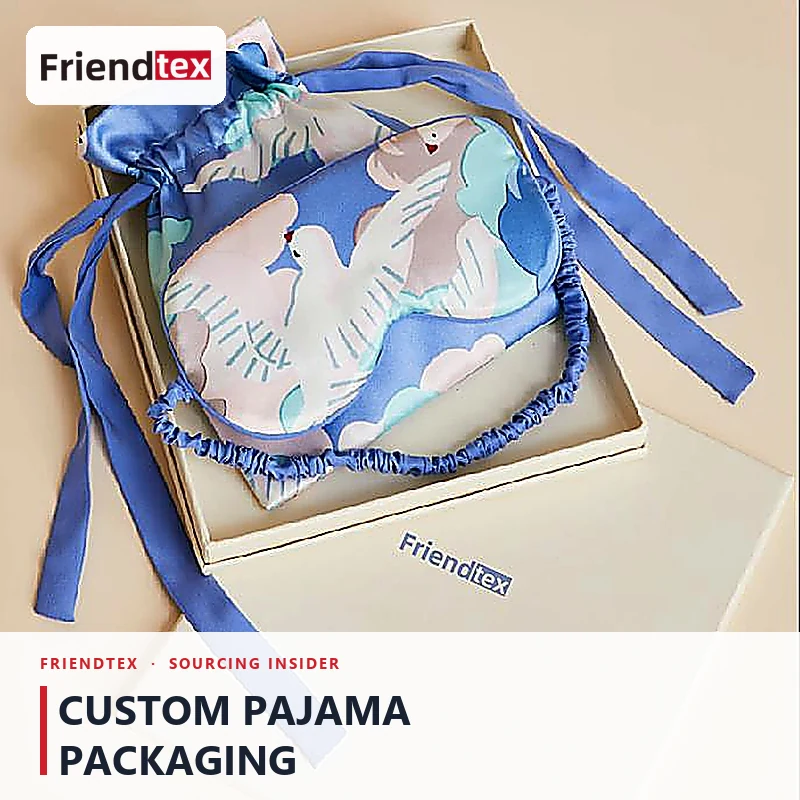
Custom pajama packaging is the part of a sleepwear programme that brands plan last and regret first. The garments get weeks of sampling while the box gets decided the day before production, and that order of operations is exactly backwards: packaging is the first thing a customer touches, the layer that protects the set through freight, and the line item that quietly adds real money to a landed cost.
This guide walks through custom packaging the way a sourcing manager would: what the options actually are, what each type costs and demands in volume, how the artwork and dieline process runs, and how boxes change your freight maths. It is written for brand owners, retail buyers and marketing teams ordering from a manufacturer — not for designers choosing a colour palette.
One advantage matters more in this category than most brands expect: a factory that already packages sleep sets, slippers, eye masks, socks and caps can pack the whole product line in coordinated packaging from one production pipeline. That is the difference between a shelf that looks curated and a shelf that looks assembled.
Key Takeaways
- Custom pajama packaging is a sourcing decision with its own volumes, costs and lead times, and treating it as an afterthought is what makes programmes ship late or arrive looking cheap.
- The packaging ladder runs from printed polybags through belly bands and hang tags to rigid gift boxes, and each rung has a different minimum order quantity and per-unit cost profile.
- Box minimums are usually higher than garment minimums because packaging suppliers print on sheets, so a brand ordering 300 pajama sets needs a packaging plan that does not depend on a 3,000-piece box run.
- The dieline and artwork process adds one to three weeks before bulk production and should be scheduled into the programme calendar, not squeezed into the packing week.
- Packaging changes freight maths because boxes add cube weight, so the carton specification belongs in the quote conversation rather than in an email after the goods are cut.
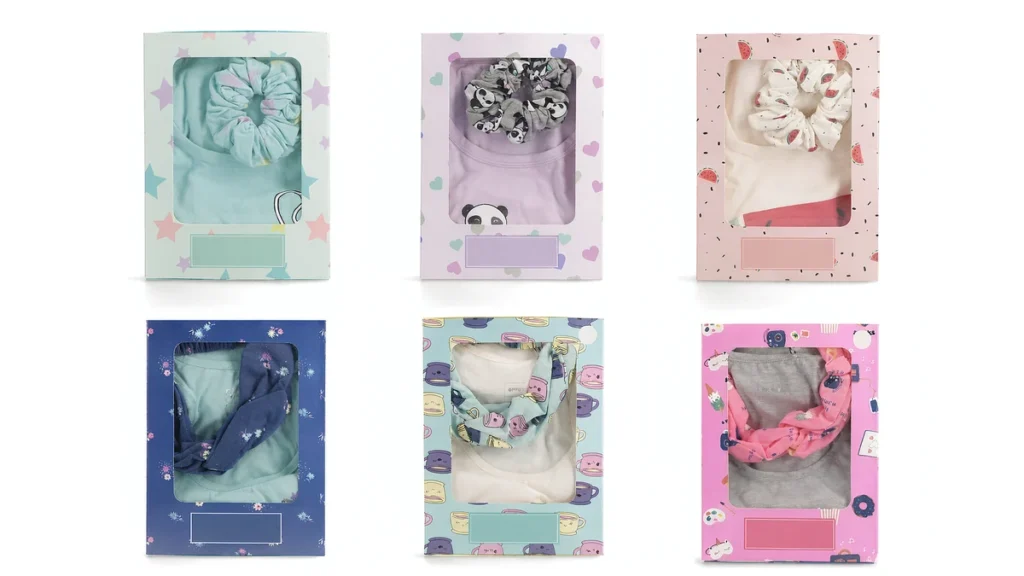
What Custom Packaging Actually Includes
Beyond the polybag
When brands say packaging they usually mean the polybag, but a sleepwear programme ships in layers. Each layer has its own supplier logic, cost band and minimum order, and the layers are chosen independently.
| Layer | What it is | Job it does |
|---|---|---|
| Polybag | Printed or plain bag per set | Protection and size labelling |
| Insert | Card, belly band or tissue | Brand moment without a full box |
| Primary pack | Printed box or pouch | The gift or shelf presentation |
| Shipping carton | Corrugated master carton | Freight protection and distribution |
A programme can stop at any layer. A marketplace seller may need nothing beyond a printed polybag; a DTC brand may want the full box; a corporate gifting programme usually wants the box plus a card. The existing pajama packaging overview covers the customer-experience side of these choices; this guide covers the ordering side.
The four decisions before you ask for a quote
Before any packaging conversation, fix four things in writing: which layers you want, the volume per layer, whether the artwork exists or needs designing, and the delivery date the packed goods must meet. Every packaging quote is built from those four inputs, and a quote requested without them is a placeholder.
The Packaging Ladder by Programme Type
Match the pack to the channel
The channel you sell through should pick the packaging rung for you. The ladder below maps the common programmes to the packaging they actually need.
| Programme | Packaging rung | Why |
|---|---|---|
| Marketplace / Amazon FBA | Plain or minimal polybag | Package is opened and discarded; polybag sizing rules apply |
| DTC e-commerce | Polybag + insert or mailer box | The unboxing is the marketing |
| Retail shelf | Printed primary pack | The package competes on the shelf beside other brands |
| Corporate gifting | Rigid box + card | Perceived value is the product |
| Subscription boxes | Coordinated pouch or box | Consistency across months is the brand |
What each rung costs to customise
Customisation cost does not rise in a straight line. Moving from a printed polybag to a mailer box multiplies the per-unit cost several times over, and a rigid gift box multiplies it again.
| Packaging type | Customisation level | Relative per-unit cost | Setup required |
|---|---|---|---|
| Plain polybag | None | Lowest | None |
| Printed polybag | Logo and colour | Low | Artwork, plate or print setup |
| Belly band / hang tag | Full brand front | Low to mid | Die-cut tooling for shapes |
| Folded mailer box | Full print | Mid to high | Dieline, print plates, tooling |
| Rigid gift box | Full print, inserts, ribbon | Highest | Box tooling, insert tooling |
The practical consequence is the one most first-time programmes miss: packaging is priced per unit but paid for in setups. A small run carries the same plate and tooling cost as a large one, which is why the cost per box falls steeply as volume rises.
Package the Whole Sleep Set, Not Just the Pajamas
One product line, one packaging system
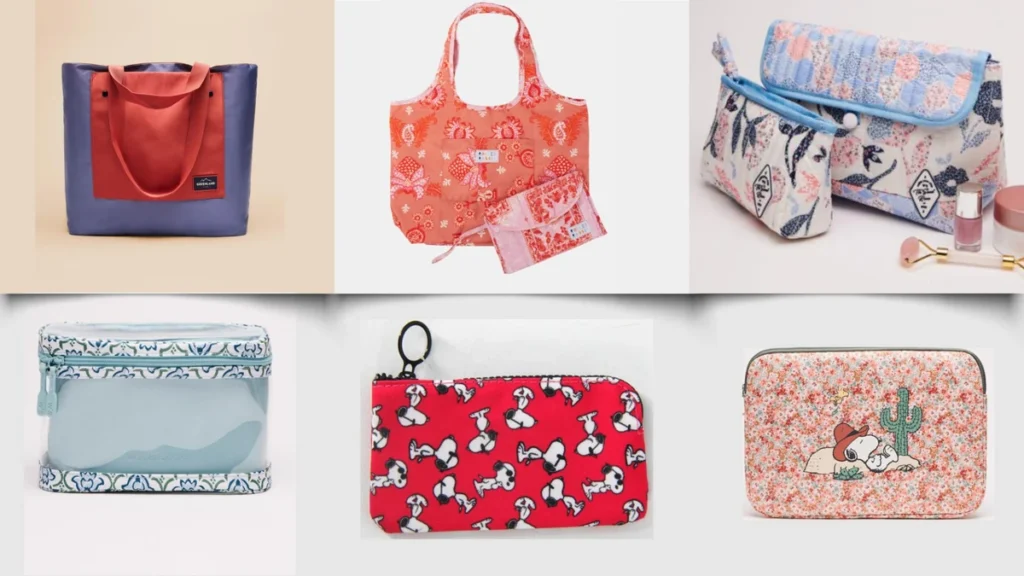
Sleep brands rarely sell pajamas alone. Slippers, eye masks, socks, sleep caps and travel accessories sit in the same catalogue, and each accessory sold loose breaks the visual system the pajamas built.
A manufacturer that already runs packaging for the full indoor set — slipper sole packaging, eye-mask packaging, sock packaging and sleepwear packaging in one collection — can coordinate all of it. The components share colour, stock and print finishes even when the formats differ, and the shelf reads as one brand instead of five vendors.
Coordinated sets without coordinated MOQ pain
Coordination does not mean every accessory gets its own custom box at full volume. The efficient pattern is one anchor package — usually the pajama set box — carrying the brand system, with accessories in simpler formats that borrow the same colour and logo treatment.
| Product | Typical pack format | Coordination lever |
|---|---|---|
| Pajama set | Printed box or belly-banded set | Anchor artwork |
| Slippers | Sole-wrap or shoebox-style pack | Shared colour and logo |
| Eye mask | Hang card or small pouch | Shared finish |
| Socks | Carded pair or mini box | Shared stock |
| Gift bundle | Outer special-shaped box | Combines the above |
This is also where low-MOQ pajama programmes and packaging meet: the garment MOQ is solved by stock fabric, and the packaging MOQ is solved by giving the anchor box the volume while accessories ride simpler formats.
MOQ and Cost Reality for Packaging
Why boxes demand higher minimums than garments
Garment factories cut to order; packaging suppliers print on sheets and price by the sheet. A box style that uses a fraction of a printed sheet still consumes the whole sheet at the press, which is why box minimums typically start higher than garment minimums and why the per-unit gap between 1,000 and 3,000 boxes is steep.
Ask any packaging quote three questions: the minimum per design, the price at your volume and at twice your volume, and whether the tooling is reusable for a reorder. The answers decide whether your packaging plan survives your real order size.
The cost conversation to have early
Per-unit packaging cost lands in the landed cost permanently, so it belongs in the programme budget from day one. The bands below are the ones buyers use to sanity-check quotes; exact figures depend on size, material and print coverage.
| Check | What good looks like |
|---|---|
| Minimum per design | Stated explicitly, not discovered at PO |
| Tooling amortisation | Separated from per-unit price, reusable on reorder |
| Freight share | Box programme quotes include carton and cube effects |
| Reorder path | Same artwork reprints without full setup |
The Artwork and Dieline Process
From dieline to print-ready
Every custom box starts as a dieline: the flat, cut-and-fold template of the final pack. Artwork is designed on the dieline, proofed flat, then produced as a physical sample before the press run.
| Stage | Input | Output | Typical time |
|---|---|---|---|
| Dieline | Box style and dimensions | Flat template file | A few days |
| Artwork | Brand assets on dieline | Print-ready file | 3 to 7 days |
| Flat proof | Print-ready file | Approved flat artwork | 1 to 2 days |
| Physical sample | Approved artwork | Real made-up box | 5 to 10 days |
| Bulk print | Approved sample | Packed goods | Runs with production |
Schedule one to three weeks for this chain. A brand that approves artwork the same week production starts has skipped the physical sample, and the unboxing is where skipped samples always surface.
Colour matching and the two-proof rule
Printed brand colours drift, especially across different materials. The fix is physical proofing: approve the flat proof for layout and the made-up sample for colour, and check the sample under the store’s lighting, not the office’s. For programmes where the box must match a garment colour exactly, matching happens at the fabric and the box in the same conversation, which is another reason to keep packaging inside the garment factory’s pipeline.
Materials and Finishes
Boards, corrugate and the weight trade
Material choice is a cost and freight decision disguised as a design decision. Folding carton board carries print beautifully and ships light; corrugated board survives freight but reads utilitarian unless printed well; rigid board reads premium and costs the most in both money and cube.
| Material | Reads as | Best for | Watch for |
|---|---|---|---|
| Folding carton board | Retail, clean | Shelf programmes | Crushes without inner support |
| Corrugated (printed) | Practical, modern | Mailers, DTC | Fine art needs coating |
| Rigid board | Premium, gift | Gifting, VIP | Heaviest per unit |
| Pouch / non-woven bag | Soft, eco cue | Sets and bundles | Less shelf presence |
Finishes that earn their cost
Most of the perceived premium in packaging comes from a small set of finishes: matte lamination, spot UV on the logo, foil on a single element and a tissue-and-sticker interior. Full-coverage specialty finishes add cost across every unit for an effect recipients barely register; one or two targeted finishes outperform them.
Gifting and Seasonal Packaging Programmes
The special-shaped tier
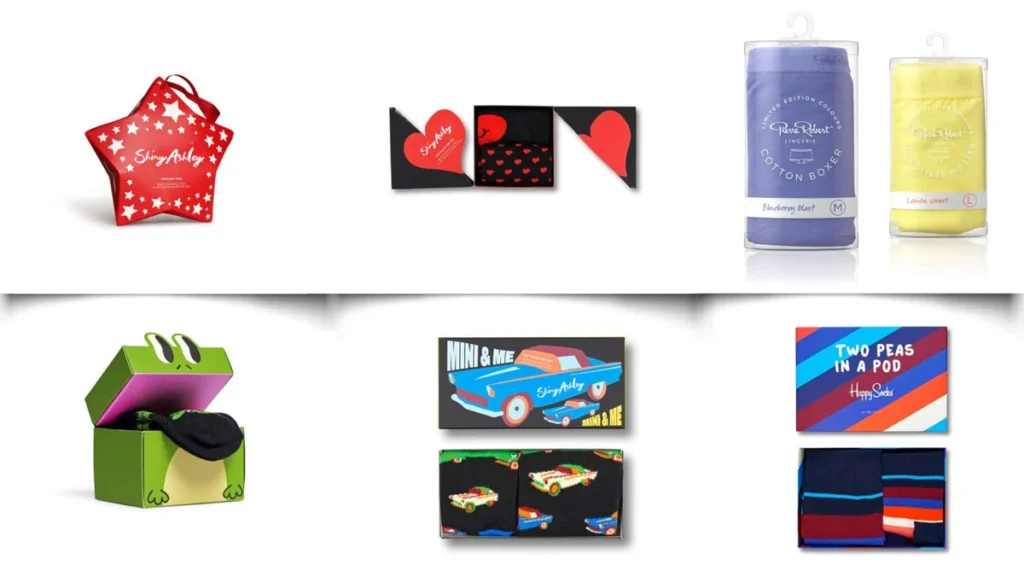
Above the standard box sits special packaging: shaped outers, drawer boxes, magnetic closures, window cutaways and bundles that combine a pajama set with slippers, socks or an eye mask in one presentation. These are the formats that turn a product into a gift, and they are also the formats with the highest tooling and minimum-order demands.
Treat the special tier as a campaign decision, not a catalogue decision. A seasonal gift edition produced at real volume justifies its tooling; a permanent catalogue item in a shaped box rarely earns the setups back.
| Seasonal moment | Packaging pattern | Planning note |
|---|---|---|
| Christmas | Festive outer over the standard box | Artwork reuse keeps setups down |
| Valentine’s Day | Gift box with ribbon and card slot | Pairs with couples and gift sets |
| Mother’s Day / Father’s Day | Warm-tone sleeve over neutral box | Sleeve costs less than a new box |
| Corporate gifting | Rigid box, card, logo treatment | Volume from one client anchors tooling |
Seasonal sleeves and belly bands are the efficient trick: the standard box carries the tooling, and the season prints on a removable wrapper. Valentine’s Day pajama programmes are the classic example of a seasonal edition built this way.
How custom pajama packaging earns repeat orders
The programmes that justify premium packaging are the ones that reorder. A gift edition that sells through becomes an annual appointment, and the tooling from year one makes year two almost free of setup. Keep the dieline files and tooling records with the factory, and confirm at quote time that a reorder inherits both.
Sustainability Without the Greenwash
Material choices that genuinely reduce impact
Sustainable packaging is mostly a materials decision: recycled board, mono-material structures that recycle cleanly, right-sized packs that cut material and freight at once, and inks and coatings chosen for recyclability. The eco-friendly apparel packaging guide covers the material options in depth.
Right-sizing deserves special attention because it is the rare measure that helps the planet and the P&L simultaneously. An oversized box wastes board, wastes freight cube and looks empty on arrival.
Claims you can actually make
Packaging claims are regulated the same way product claims are. Recyclable means recyclable in the destination market’s actual streams; percentage claims on recycled content need supplier documentation; and vague labels such as eco-friendly carry legal risk in markets with green-claims rules.
The safe pattern for a brand of any size: make specific, documentable claims, and ask the packaging supplier for the material documentation that backs each claim before it goes on the box. This is a supplier-conversation question, not a marketing decision, and it belongs in the same email as the dieline request.
Sizing, Cartons and Freight
The carton maths most brands skip
Every packaging decision ends in a corrugated master carton, and the carton is where freight is priced. Boxes add cube weight; a poorly nested pack can raise the shipping volume of a programme by a third, and freight is quoted on volume as much as weight.
| Decision | Freight effect |
|---|---|
| Box nesting flat vs made-up | Flat-packed outers cut return-freight on packaging |
| Set folded tight vs loosely bagged | Tight folds cut cube per carton |
| Carton weight ceiling | Keeps one-person handling and avoids surcharges |
| Mixed-SKU cartons | Distribution by size and style per destination |
Bring the carton specification into the packaging conversation instead of after it. The factory that packs the set also loads the carton, and packing and loading are optimised together — the shipping guide for pajamas from China covers the freight side in depth.
What packaging changes in the production calendar
Made-up boxes that ship flat to the factory still arrive as freight, get inspected and get stocked before packing day. Add a week of buffer for packaging arrival on top of garment production, and add more if the box is imported or tooled from scratch.
Quality-Check Packaging Before Shipment
The packaging inspection list
Packaging defects surface at the worst possible moment — in the customer’s hands — so packaging gets its own inspection pass before the cartons close.
| Check | What good looks like |
|---|---|
| Print colour vs approved sample | No drift across the run |
| Fold and glue quality | Square corners, no lifting |
| Insert fit | Set sits snug, no rattle |
| Carton compression | Packed cartons stack without crushing |
| Size labelling on polybags | Matches garment inside |
| Barcode / label scannability | Scans first time at the destination |
The two failures that cost reprints
Colour drift and bad fits are the two packaging failures that cannot be patched after shipment, and both are prevented the same way: a physical made-up sample approved against the flat proof, checked with the actual garment inside, under honest lighting. Labels and hang tags follow the same proofing logic and are worth reading alongside this guide.
Conclusion
Custom packaging is a sourcing programme with its own ladder, volumes, lead times and freight consequences — and a factory that runs packaging for the whole sleep set can solve it inside one pipeline instead of five. Plan the layers before the quote, schedule the dieline chain into the calendar, proof physically, and put the carton spec in the same conversation as the artwork.
To recap the essentials:
- Choose the packaging rung from your sales channel — polybag for marketplace, box for DTC, shelf pack for retail, rigid box for gifting.
- Budget packaging per unit and in setups, and confirm minimums per design before the PO.
- Coordinate the whole product line through one anchor package and simpler accessory formats.
- Schedule one to three weeks for dieline, artwork and physical proofing.
- Inspect packaging as a separate pass before cartons close, with the garment inside the box.
If you are building a programme now, ask an experienced OEM sleepwear manufacturer to quote the packaging alongside the garments — the quality of that combined quote tells you whether packaging is a real capability or an afterthought at that factory.
FAQ
What MOQ should I expect for custom pajama packaging?
Printed polybags and hang tags usually carry the lowest minimums, folded mailer boxes run higher, and rigid gift boxes run highest because of tooling and sheet printing. The honest approach is to ask for the minimum per design alongside a price at double the volume — the gap between those two prices tells you how volume-sensitive the pack is. Smaller programmes solve the box problem by putting volume into one anchor package and keeping accessories on simpler formats.
How much does custom packaging add to the cost of a pajama set?
It depends on the rung: a printed polybag adds very little, an insert or belly band adds a modest amount, and a full printed or rigid box adds the most — often a visible share of the landed cost for gifting programmes. Setup costs are fixed, so per-unit cost falls steeply with volume. Price the programme per delivered box, including freight effects, before comparing quotes.
Can packaging be ordered without custom artwork?
Yes. Plain polybags and stock cartons need no artwork and carry no setup, which suits marketplace sellers and first test orders. Many brands start plain for the first run and move to printed packaging once the style proves itself — the garment factory can hold the artwork ready for the reorder.
How long does the custom packaging process take?
The dieline-to-sample chain typically takes one to three weeks depending on box complexity, then bulk print runs alongside garment production. Add buffer for packaging arrival and packing if boxes are made up and shipped flat to the factory. The physical sample stage is the one step that should never be skipped.
Can the packaging match our brand colours exactly?
Paper printing matches brand colours with standard print processes, and exact Pantone matching is possible on most box stocks with a spot colour. Matching a box to a fabric colour is harder because the two materials take colour differently — the reliable way is to approve both proofs side by side in the same conversation with the factory, not to match each against a screen separately.