You want to start a pajama business and wonder how to stand out. Focus on creating a strong brand identity, do your market research, and choose sustainable sourcing for your pajamas. Quality matters to customers, so work with trusted manufacturers.
The pajama business startup world offers big opportunities, with the global market expected to reach over $21 billion by 2035. If you care about both profits and the planet, you can build a brand that lasts.
Key Takeaways
Create a strong brand identity to stand out in the pajama market.
Focus on sustainable sourcing and quality manufacturing for long-term success.
Understand your target customers and tailor your products to their needs.
Use market research to identify trends and gaps in the sleepwear industry.
Partner with reliable manufacturers like Friendtex for quality and sustainability.
Define Your Pajama Business Startup

Start Your Own Pajama Brand: Vision and Niche
When you start your own pajama brand, you need a clear vision. Ask yourself what makes your sleepwear different. Do you want to focus on comfort, style, or sustainability? Maybe you want to create pajamas for kids, adults, or even the whole family.
The pajama industry has many niches. Some brands target younger customers who want trendy and affordable loungewear. Others focus on high-quality, branded sleepwear for adults in places like Japan and South Korea.
You can also find a growing demand for stylish and comfortable pajamas, thanks to remote work and changing lifestyles.
Popular types of sleepwear include two-piece sets, nightgowns, and onesies. Each type attracts different people. Two-piece sets look structured and neat. Nightgowns feel elegant and soft.
Onesies are fun and cozy, especially for kids. Think about which style fits your vision and which group you want to serve. The pajama business startup world is growing fast, so finding your niche helps you stand out.
Tip: Write down your brand’s mission and what you want your sleepwear to represent. This will guide your decisions as you grow.
Identifying Target Customers and Market Position
To succeed, you need to understand your target customer. Who will wear your pajamas? What do they care about most—comfort, style, price, or eco-friendly materials? Look at the main groups who buy sleepwear and what motivates them:
Demographic Group | Market Share (%) | Key Purchasing Motivations |
|---|---|---|
Residential Consumers | 87.3 | Comfort, safety, developmental support, convenience |
Children (Ages 5-12) | 24.7 | Design aesthetics, personal style preferences, and emotional attachment |
Adults (Millennials and Gen Z) | 7.3 | Comfort, wellness, premium positioning, sustainability |
You can see that most customers want comfort and convenience. Kids love fun designs and colors. Adults, especially Millennials and Gen Z, look for wellness, premium quality, and sustainability. If you want to reach these groups, you need to match your sleepwear to their needs.
To find your place in the market, check out what other brands are doing. Market research reports and competitor analysis tools can help you spot trends and gaps. Look at what styles are popular, what materials brands use, and how they talk to their customers.
This helps you shape your own message and find ways to offer something new.
Use competitive landscape analysis to see who leads the market.
Study consumer behavior to learn what drives buying decisions.
Watch for trends in sleepwear, like new fabrics or eco-friendly options.
Building a Sleepwear Brand Identity

Now it’s time to define your brand identity. This is how customers will see and remember your sleepwear brand. Start by thinking about your mission and values. What do you stand for?
Maybe you want to offer the softest pajamas, or you want to lead in sustainable sleepwear. Your unique selling proposition (USP) sets you apart from other brands.
Here’s a simple way to find your USP:
Define your company’s mission and values.
Analyze your competitors to spot market gaps.
Identify what makes your sleepwear special—maybe it’s the fabric, the fit, or your customer service.
Focus on benefits that only you can offer.
Think about what influences your customers’ buying decisions.
Create a clear statement that shows your unique value.
A strong USP helps you connect with your audience. It gives customers a reason to choose your pajamas over others. When you define your brand identity, you build trust and loyalty. This is key for long-term success in the sleepwear market.
Plan and Validate Your Sleepwear Brand
Market Research and Trend Analysis
You want your sleepwear brand to stand out in a crowded market. Start by looking at what people want and what’s popular right now. Consumers care more about eco-friendly fabrics like organic cotton, bamboo, and hemp. Comfort matters a lot, and many buyers look for ethical production methods.
The market is moving toward slow fashion and conscious design. These trends show that people value quality and sustainability in sleepwear.
Eco-friendly fabrics are in demand.
Comfort and ethical production drive buying decisions.
Slow fashion and conscious design reflect consumer values.
You should study these trends and see how they fit your pajama business startup. This helps you create products that match what buyers want.
Business Structure and Legal Setup
You need to set up your business the right way. Many fashion startups choose a Limited Liability Company (LLC) because it protects their personal assets. You must get a Registered Identification Number (RN) from the Federal Trade Commission for labeling your sleepwear.
You also need a Seller’s Permit from your state’s department of revenue so you can collect sales tax. These steps help you operate legally and build trust with customers. Don’t forget to estimate your startup costs early. This helps you plan and avoid surprises.
Form an LLC for liability protection.
Get an RN for product labeling.
Secure a Seller’s Permit to collect sales tax.
Compliance, Insurance, and Certifications
If you plan to sell children’s sleepwear, you must follow strict rules. Safety and compliance matter a lot. You need to test fabrics for flammability, even after many washes. You must check seams and trims before mass production. Each garment must pass production testing for flammability.
Testing Stage | Description |
|---|---|
Fabric Testing | Fabrics must meet flammability requirements after 50 washes. |
Prototype Testing | Seams and trims are tested before mass production. |
Production Testing | Each garment is tested for flammability individually. |
You must provide a Children’s Product Certificate for every batch. Keep records of flammability testing for at least three years. Non-compliance can lead to recalls and penalties. Insurance protects your sleepwear business from risks. Certifications show customers that your products are safe and high-quality.
If you want to validate your idea, test your sleepwear before launch. Early testing helps you find bugs, gather real feedback, refine your product, and protect your reputation.
Source and Manufacture Pajamas with Friendtex
Sustainable Fabric Selection for Sleepwear
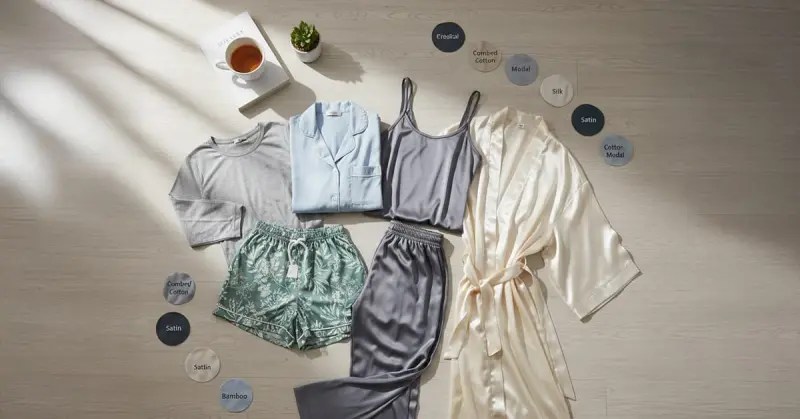
Choosing the right materials for your sleepwear brand is a big step. You want your pajamas to feel soft, last long, and be safe for everyone, especially for children’s sleepwear. When you pick sustainable fabric options, you help the planet and your customers.
These fabrics use fewer chemicals and eco-certified dyes, which means less risk for people with allergies or sensitive skin. You also support fair labor and better working conditions.
Here’s a quick look at the environmental and social benefits of using sustainable fabrics:
Benefit | Description |
|---|---|
Ecosystem Impact | Sustainable fabrics minimize the impact of fashion on the ecosystem by focusing on recycling and saving natural resources. |
Waste Reduction | The production process aims to minimize waste, contributing to a healthier environment. |
Resource Conservation | Sustainable fabrics use recycled and biodegradable materials, reducing the burden of fashion waste. |
You can also see these benefits in your daily business:
Ethical sourcing means workers get fair wages and safe conditions.
Sustainable fabrics lower exposure to harmful chemicals, keeping your customers safe.
When you look at fabric choices, you’ll find many options. Organic cotton is soft, breathable, and biodegradable, making it perfect for everyday luxury sleepwear. Bamboo sleepwear is silky and wicks away moisture, so it’s great for warm climates or travel.
Linen is strong and gets softer with each wash, which works well for summer collections. Pima cotton is known for its long fibers and durability, making it a smart pick for daily use. Tencel and modal offer a silky drape and are very eco-friendly, while mulberry silk is a top choice for high-end or bridal sleepwear.
Fabric Type | Key Detail | Best For |
|---|---|---|
Soft, breathable, biodegradable | Everyday luxury sleepwear | |
Silky, moisture-wicking | Warm climates, travel | |
Highly breathable, durable | Hot weather, summer collections | |
Long-staple, durable | Daily use, high durability | |
Silky drape, eco-friendly | Premium cooling sleepwear | |
Mulberry Silk | Luxurious, thermoregulating | High-end gifting, bridal |
Tip: Organic cotton may cost less over time because it lasts longer. Mulberry silk costs more but feels extra special. Choose what fits your brand and your customers’ needs.
If you want to offer eco-conscious comfort, focus on these sustainable fabric options. Your customers will notice the difference, especially parents shopping for children’s sleepwear.
Partnering with Friendtex for Quality Manufacturing
If you want to partner with a reliable manufacturer, Friendtex stands out. Friendtex leads the way in sustainable and high-quality sleepwear production. They use eco-friendly fabrics and follow strict sustainability standards.
Their certifications, like GOTS, OEKO-TEX, and the Better Cotton Initiative, show their commitment to safe and ethical products. Friendtex also meets CPSC rules, which is important for children’s sleepwear.
Here’s what makes Friendtex special:
Use of eco-friendly fabrics and sustainable production practices.
Certifications from top agencies, including GOTS and OEKO-TEX.
Commitment to ethical production and premium materials.
When you work with Friendtex, you get a one-stop solution. They help you design, choose fabrics, and customize every detail. You can create pajamas that match your brand’s vision, from the fabric to the packaging.
Friendtex offers both OEM and ODM services, so you can start with your own designs or use their expertise to develop new ones.
The process of making sleepwear with Friendtex is smooth and clear. Here’s a step-by-step look:
Step | Description |
|---|---|
Design Development | Create and refine initial concepts for your pajama. |
Fabric Selection | Choose the right fabric and materials for comfort and durability. |
Trims and Assessments | Select buttons, zippers, and other accessories. |
Pattern Making | Develop precise patterns for cutting. |
Sample Making | Produce a sample for approval. |
Fabric Cutting | Cut the fabric with accuracy to avoid waste. |
Sewing | Assemble the pieces into finished sleepwear. |
Quality Control | Inspect for defects and ensure standards are met. |
Packing | Prepare the finished pajama for distribution. |
Note: Friendtex’s team guides you through each step, making sure your sleepwear meets your standards and your customers’ expectations.
Sampling, Testing, and Quality Control
You want your sleepwear to be safe, comfortable, and long-lasting. This is even more important for children’s sleepwear, which must meet strict safety rules. Friendtex follows industry best practices for sampling, testing, and quality control. They check every stage, from raw materials to the finished product.
Here’s how they do it:
Stage of Production | Quality Control Measures |
|---|---|
Raw Materials | Fiber composition testing, colorfastness testing, safety performance evaluations |
Cutting and Sewing | Precision equipment, manual double-checking for pattern accuracy, stitch density, stitch uniformity, and elastic band rebound |
Finished Garment | Tests for anti-pilling, shrink resistance, abrasion resistance, stretch performance, individual inspections for appearance, size stability, accessory durability |
Batch Inspection | Sampling reinspection, pre-packaging quality control to ensure safety and comfort |
You can expect these steps:
Early detection and verification of sample clothing technology and accessories.
Mid-term testing of hand feel, color, size, and sewing appearance.
Final inspection according to AQL1.5 sampling standards.
Friendtex also uses high-quality packaging to protect your sleepwear. They include clear care instructions, which helps your customers keep their pajamas in great shape. For children’s sleepwear, Friendtex follows the Flammable Fabrics Act and CPSC rules.
They test for flammability and keep records to prove compliance. Certifications like GOTS, OEKO-TEX, and BSCI show that your products meet top sustainability standards.
Callout: When you choose Friendtex, you get peace of mind. Your sleepwear will be safe, comfortable, and ready for the market.
If you want to build a trusted sleepwear brand, you need to partner with a reliable manufacturer like Friendtex. Their focus on quality, safety, and sustainability helps you stand out, especially if you want to offer children’s sleepwear or bamboo sleepwear.
You can deliver eco-conscious comfort and meet the needs of today’s customers.
Launch and Grow Your Pajama Business
Product Range and Customization
You want your sleepwear brand to stand out. Offering a wide product range helps you reach more customers. Popular options include two-piece pajama sets, nightgowns, pajama shorts sets, onesies, and chemises. Customization makes your pajamas unique. You can add logos, prints, or embroidery.
Many customers love matching family pajama sets, especially for holidays. Personalized pajamas make great gifts and let people express their style.
Pajama Type | Description | Customization Options |
|---|---|---|
Two-Piece Pajama Sets | Classic sets for all seasons. | Logos, piping, print variations |
Nightgowns | Lightweight and elegant. | Lengths, necklines, fabric choices |
Pajama Shorts Sets | Ideal for warm climates. | Prints, trims, embroidery |
Onesies | Full-body warmth for kids and adults. | Novelty designs, themes |
Chemises & Camisole Pajamas | Luxury and comfort. | Elegant custom designs |
Adult sleepwear comes in cotton, silk, or bamboo with intricate prints. Child sleepwear focuses on safety and comfort with bright colors and cartoon characters.
Pricing and Profit Strategies
You need to price your pajamas smartly. Think about customer demand and what makes your sleepwear special. Value-based pricing works well. Highlight features like durability and softness to justify a higher price. Customers pay more for quality. Try tiered pricing to reach different segments.
Offer budget options and luxury sleepwear. Adjust prices based on production costs and market trends. This helps you maximize sales and profit margins.
Use tiered pricing for different customer groups.
Offer premium and affordable sleepwear.
Focus on unique selling points to boost value.
Online Presence and Marketing
Building your e-commerce site is key. Make sure your shop works smoothly on phones and tablets. Fast-loading pages and easy checkouts keep customers happy. Add product recommendations and reviews to engage shoppers. Secure payment options build trust and boost sales.
Use marketing channels like Instagram, TikTok, and influencer partnerships to reach new audiences.
Influencer marketing is huge. Short-form videos on TikTok and Instagram help you connect with millions.
Create high-quality content for your sleepwear brand. Tools like Desygner help you design visuals that match your brand. Plan your marketing to manage customer engagement and build relationships.
Customer Service and Feedback
Great customer service sets your pajama business startup apart. Make shopping easy and offer self-service tools like FAQs. Give pre-sales information to answer questions before customers buy. Solve issues quickly to avoid follow-ups. Send automated surveys after purchases.
Use SMS for feedback requests. Integrate tools like Yotpo for reviews. Engage customers in brand communities to build loyalty and improve your sleepwear.
Tip: Listen to feedback and keep improving your sleepwear brand. Happy customers lead to repeat sales and growth.
Conclusion
You can launch a pajama business that stands out when you focus on brand identity, quality, and sustainability. Customers notice when you use eco-friendly materials and care about ethical production. Here are some long-term benefits you gain:
People see higher quality in sustainable pajamas.
Shoppers feel your products have more value and will pay more for them.
Buyers prefer brands that match their values.
Many brands have found success with this approach:
Brand Name | Key Products | Location |
|---|---|---|
Marlon Lingerie | Sleepwear, lingerie | West Yorkshire, UK |
Pico Underwear | Sleepwear, shirts | New York, USA |
Cotton Style | Sleepwear, loungewear | Vila Nova de Famalicão, Portugal |
Woodstock Laundry | Sleepwear, shirts | Cape Town, South Africa |
Organic & More | Women’s Wear, Baby Apparel | Noida, Uttar Pradesh, India |
Billoomi Fashion | Pajamas, loungewear | N/A |
Take the next step. Partner with Friendtex for trusted sourcing and manufacturing. Build your brand, listen to your customers, and watch your pajama business grow.
FAQ
How much money do I need to start a pajama line?
You can start small with $2,000–$5,000 for samples and a basic website. If you want a bigger launch, plan for $10,000 or more. Costs depend on your designs, order size, and marketing.
What fabrics work best for pajamas?
Soft, breathable fabrics like organic cotton, bamboo, and modal work great. These materials feel comfortable and last longer. You can also try Tencel or silk for a premium touch.
Do I need special certifications for children’s sleepwear?
Yes! Children’s pajamas must meet safety standards. You need flammability testing and a Children’s Product Certificate. Partnering with certified manufacturers like Friendtex makes this process easier.
Can I customize my pajama designs with Friendtex?
Absolutely! Friendtex lets you pick fabrics, colors, prints, and trims. You can add your logo or create matching sets. Their team helps you turn your ideas into real products.